The data platform behind the world's leading voice AI teams
Stop patching together spreadsheets, scripts, and crowdsourcing platforms. Encord gives audio AI teams a single place to curate, annotate, and evaluate at any scale.
Why leading audio AI teams are switching to Encord
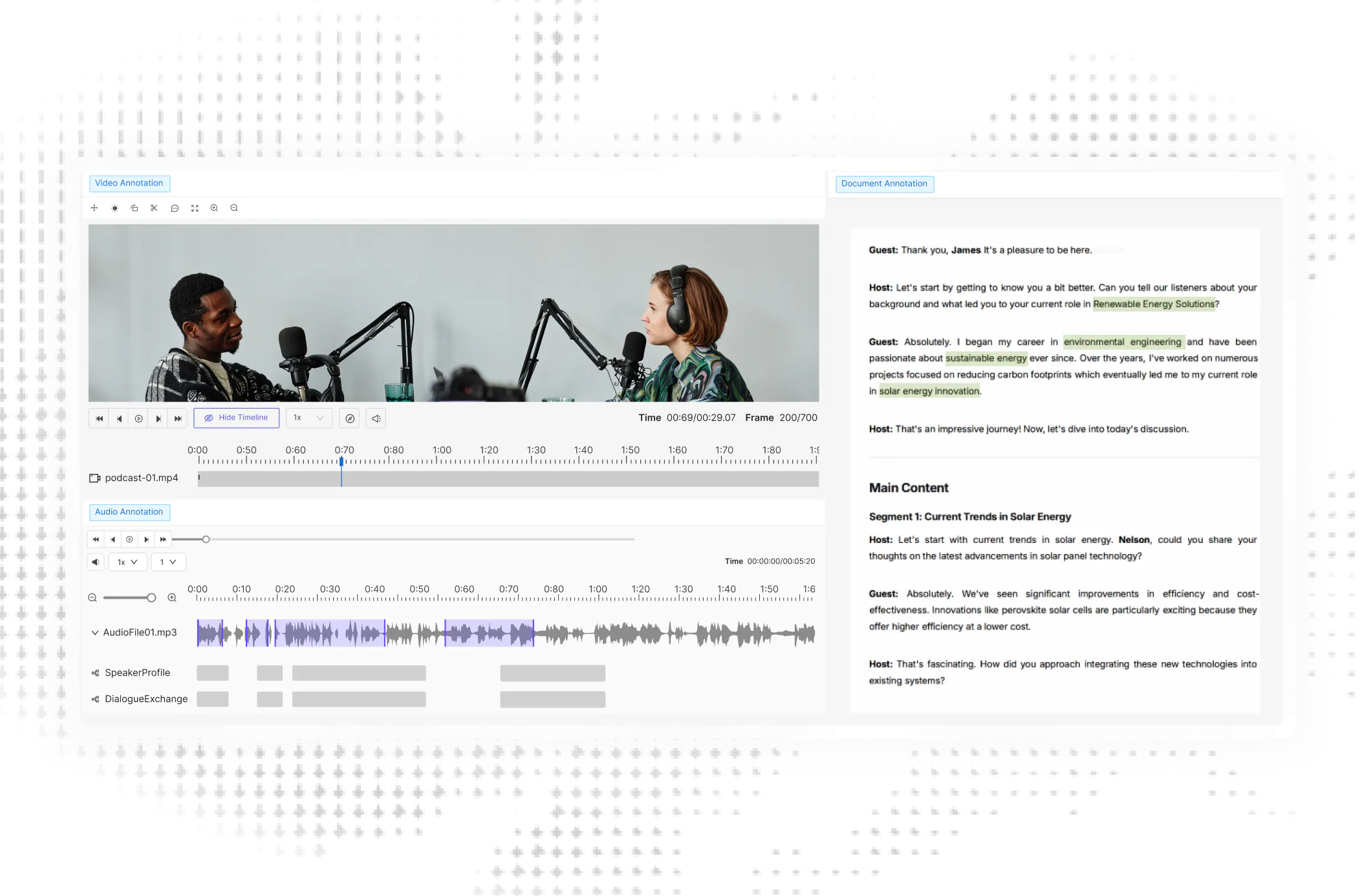
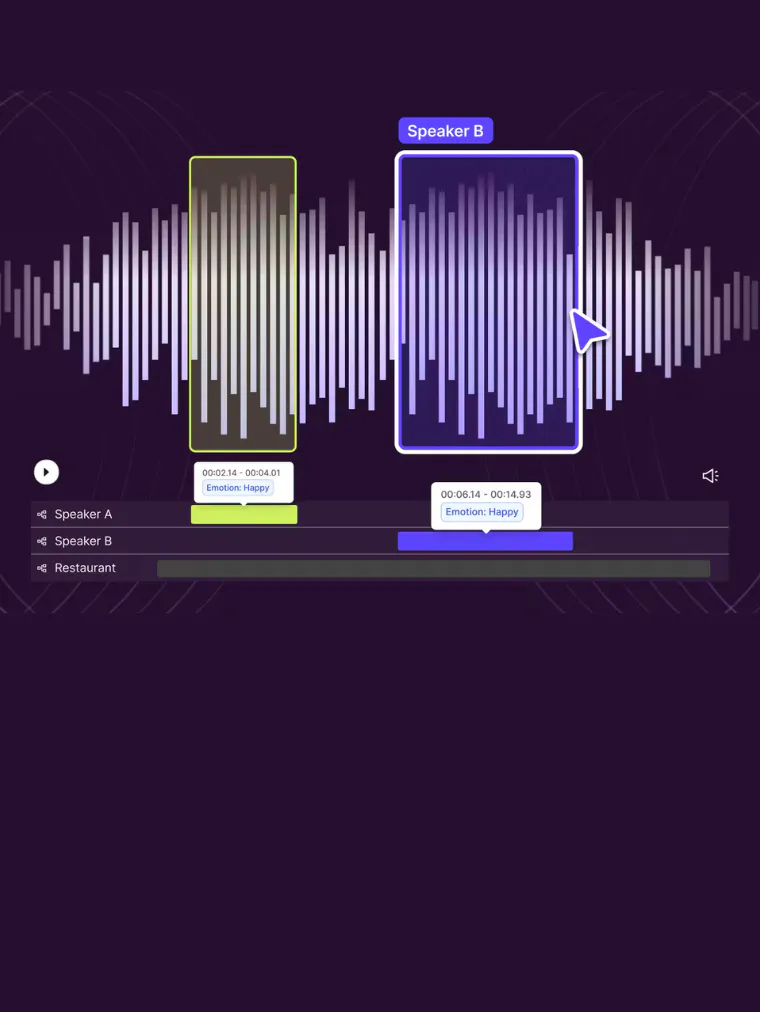
Stop annotating audio in spreadsheets
Transcription correction, speaker labeling, and QA is hard to scale. Encord gives you waveform-native annotation, speaker diarization, timestamp alignment, and non-verbal event labeling in one purpose-built interface.
Stop annotating audio in spreadsheets
Transcription correction, speaker labeling, and QA is hard to scale. Encord gives you waveform-native annotation, speaker diarization, timestamp alignment, and non-verbal event labeling in one purpose-built interface.
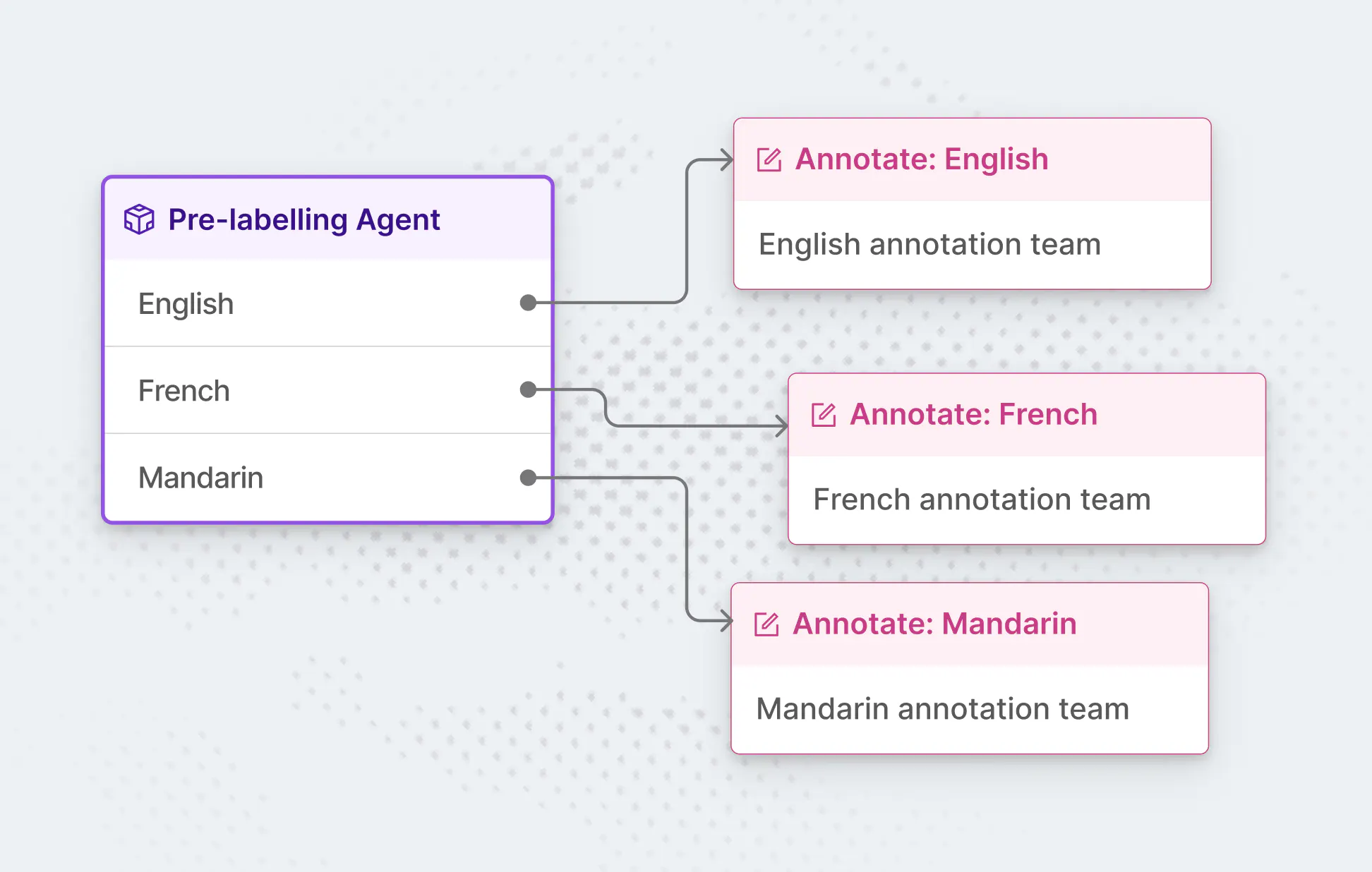
Get qualified annotators for non-English languages
Building TTS or ASR for Hindi, Arabic, Spanish, or Mandarin? Sourcing qualified annotators can be slow, and inconsistent. Encord provides dedicated annotation teams across 50+ languages, with sprint-based delivery that matches your release cadence.
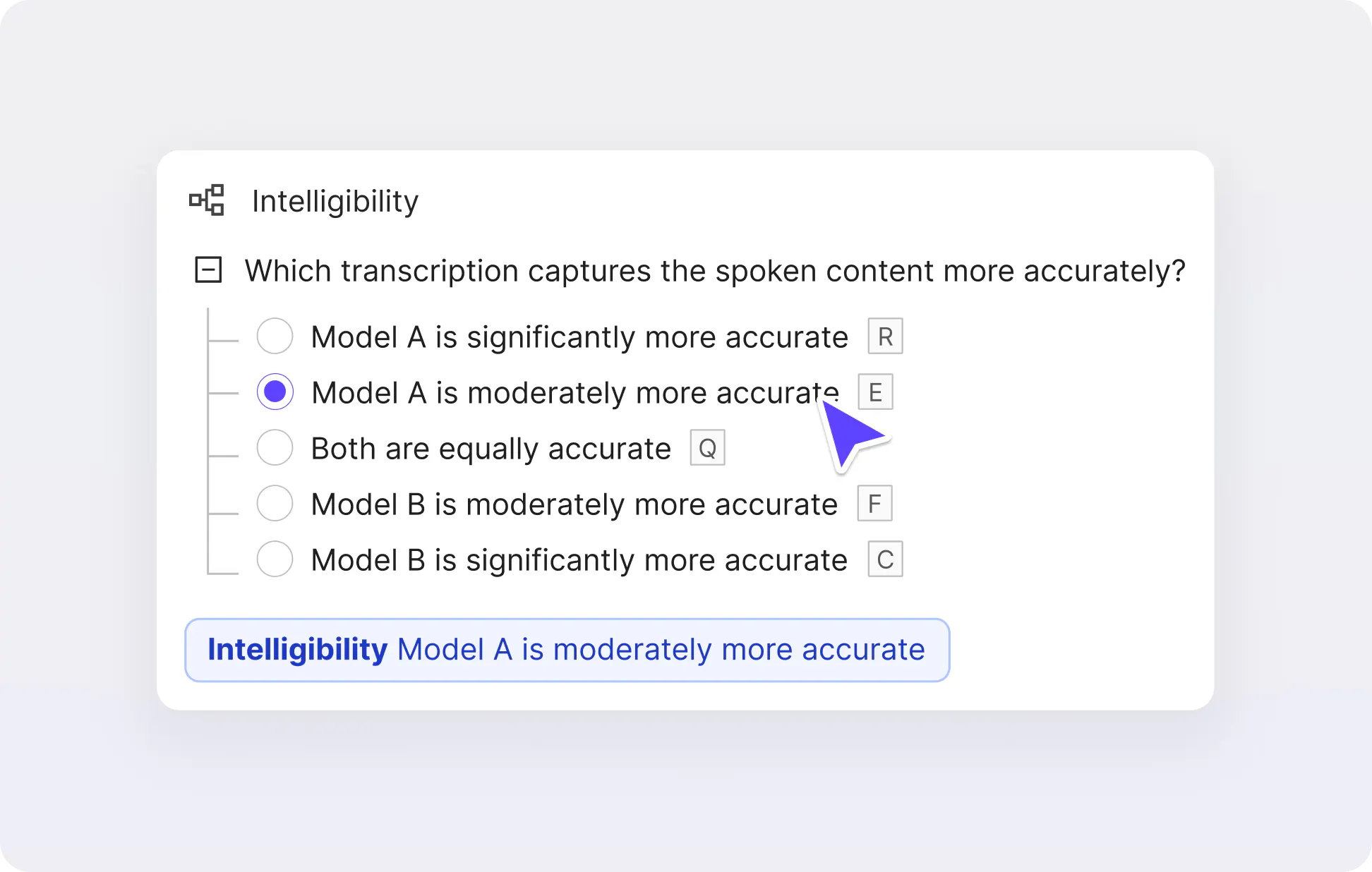
Run structured human evals on model outputs
Comparing TTS model versions requires preference ranking, pairwise comparisons, and structured preference evaluations across hundreds of samples. Encord has it out of the box, with dashboards that show you consensus scores, annotator reliability, and result distribution.
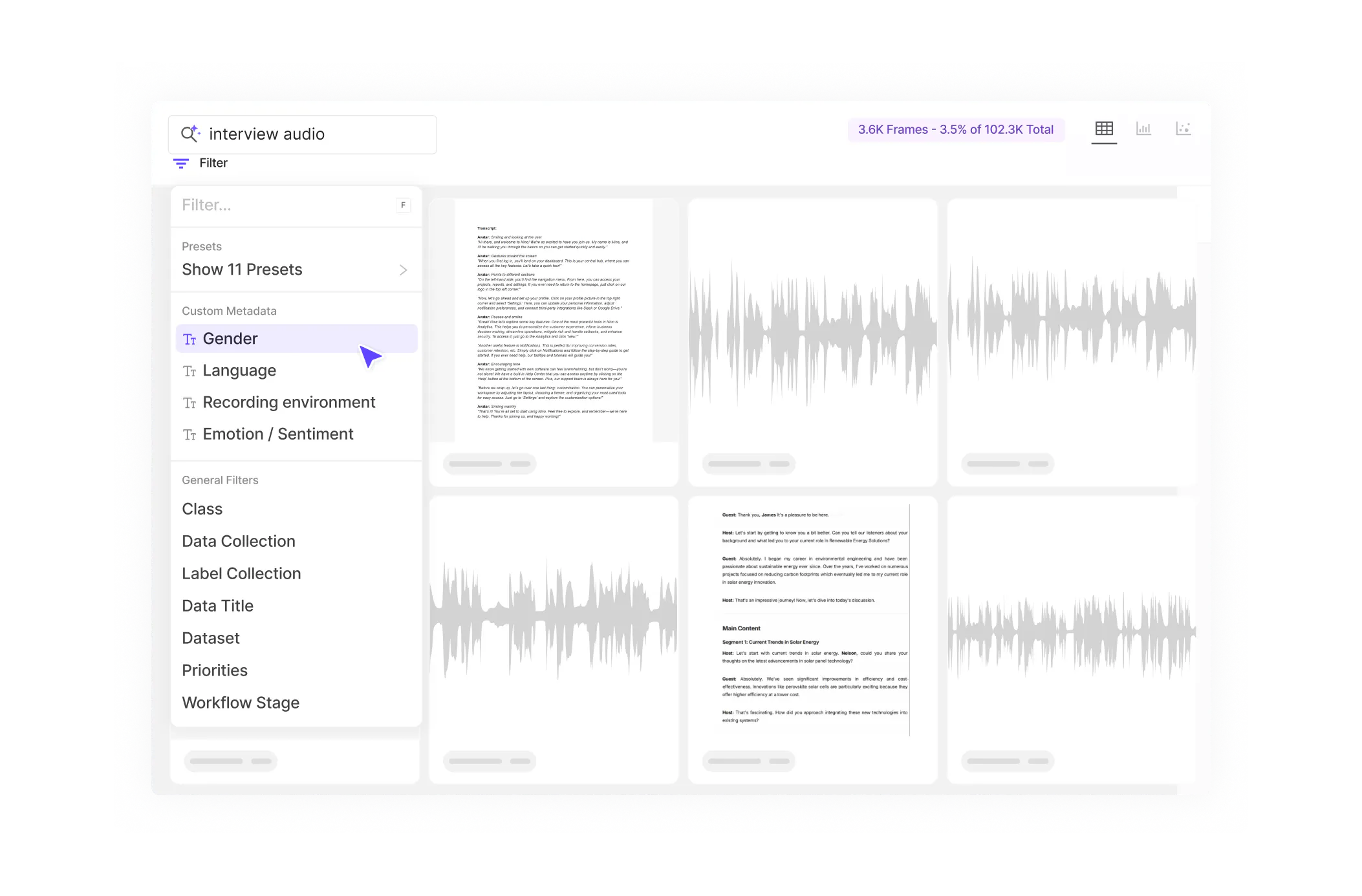
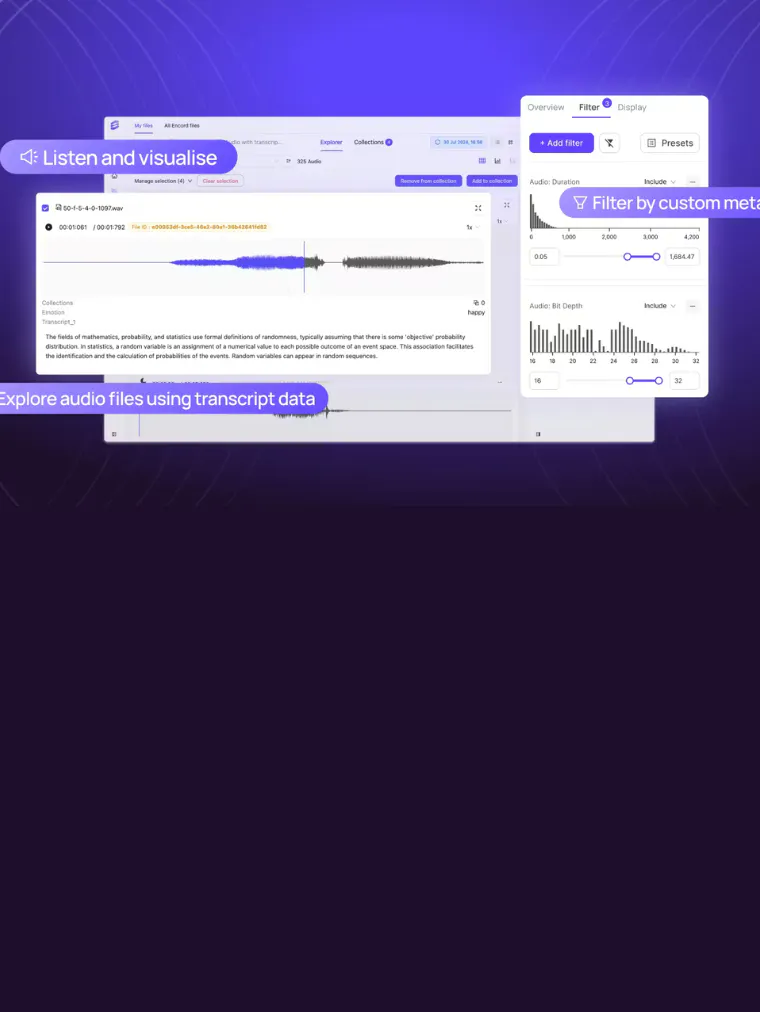
Stop sending low-quality audio to annotation
Encord lets you filter, search, and curate your dataset by depth, duration, and custom metadata before a single file hits the annotation queue. Only the samples that will actually move your model forward get labeled.
Stop sending low-quality audio to annotation
Encord lets you filter, search, and curate your dataset by depth, duration, and custom metadata before a single file hits the annotation queue. Only the samples that will actually move your model forward get labeled.
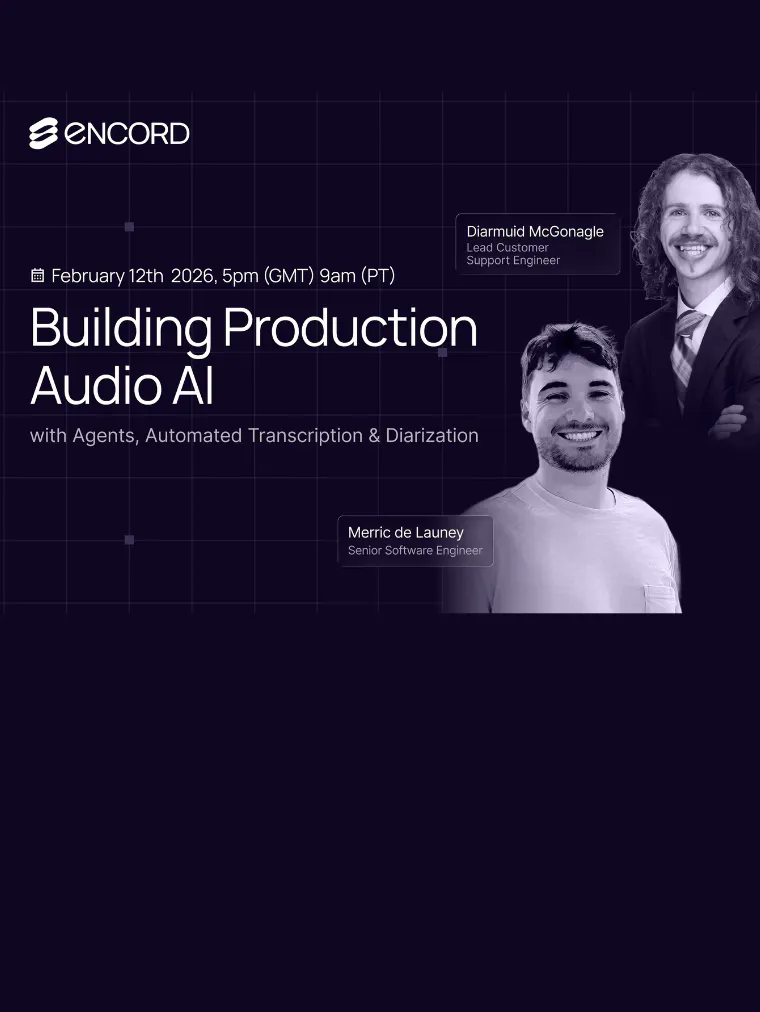
Deploy Transcription & Diarization Agents with Encord
Additional resources for audio AI teams
Frequently asked questions
Yes. Encord renders audio files directly in the platform, with temporal segmentation for speaker labeling and diarization workflows. You're not exporting files to external players or patching together tools. Annotation, review, and QA all happen in the same interface.
Yes. Encord supports both committed annual annotation services and ad hoc, sprint-based delivery. You're not locked into a continuous service when demand is low. Most teams can get a dedicated annotation team up and running within a week of kicking off a new sprint.
Scale AI, for example, offers strong RLHF and preference ranking for text, but lacks audio-native tooling, such as waveform rendering, diarization, and temporal annotation. Encord handles pairwise audio comparison, speaker labeling, and non-verbal event classification in one purpose-built interface.
Encord is designed to make your internal team faster and more consistent, handling workflow routing, consensus management, QA review layers, and performance dashboards. When you need to scale for a release sprint or a new language, Encord's managed workforce plugs straight in without disrupting your existing setup.
Yes. Encord has purpose-built preference ranking and pairwise comparison workflows for model output evaluation. You can define rubric-based scoring dimensions (naturalness, intelligibility, prosody, speaker identity) and run structured human evals at scale. Annotator agreement is tracked automatically, so you know when a result is reliable versus noisy.
The SDK lets you automate task creation, push audio files programmatically, trigger QA checks, and export labeled data directly into your training pipelines. Teams typically use it to close the loop, feeding model failure cases from production back into annotation queues automatically, without manual handoffs.