Best Foundation Models for the Physical World in 2026: Cosmos, GR00T, and What's Next

TL;DR:Foundation models are large AI models pre-trained once on massive data and adapted across many downstream tasks, the logic behind GPT-style language models. World foundation models (WFMs) apply that same idea to the physical world: instead of predicting the next word, they predict how a physical environment changes over time. NVIDIA Cosmos and NVIDIA Isaac GR00T are driving most of the current conversation. Cosmos simulates the world; GR00T acts in it. A wider field has formed around them: Google DeepMind's Genie 3 and Gemini Robotics, World Labs' Marble, Physical Intelligence's pi-series models, and Meta's V-JEPA 2. This article covers what foundation models are, how world foundation models fit inside that category, how they work, top use cases, a ranked Top 10 for 2026, and where the industry is heading next.
What Are Foundation Models, and Where Do they fit In?
What is a foundation model?
A foundation model is a large AI model pre-trained on a broad dataset at massive scale, then adapted to many different downstream tasks rather than built for just one.
- Origin: the term comes from the LLM world. GPT-style models are trained once on huge volumes of text, then fine-tuned or prompted for tasks like summarization, coding, or Q&A.
- Core idea: pretrain once, adapt to many tasks, instead of training a separate narrow model per task.
- Where it's expanded: the same approach now covers images, audio, and, most recently, the physical world.
What is a world foundation model?
A world foundation model (WFM) is a foundation model built specifically to understand and predict the physical world, rather than language or static images.
| Attribute | Large Language Model (LLM) | World Foundation Model (WFM) |
| Training data | Text (books, articles, code, web pages) | Video, images, and sensor data (LiDAR, camera feeds) |
| Core prediction task | The next word in a sequence of text | The next frame or physical state in an environment |
| Underlying goal | Model language patterns and meaning | Model real-world physics: gravity, motion, and cause and effect |
| Example prediction | The next word in a sentence, given the words before it | Where a dropped object will land, or how light shifts across a room as it moves |
| Output format | A sentence, paragraph, or block of text | A video simulation or a predicted physical state |
| Primary use case | Answering questions, writing, summarizing, coding | Training and testing robots or autonomous vehicles in simulation |
| Example models | GPT-4, Claude, Gemini | NVIDIA Cosmos, Meta V-JEPA 2, NVIDIA DreamDojo |
That simulation output is what makes WFMs useful in practice: it can train or test another system, most often a robot policy or an autonomous vehicle stack, in an environment governed by real physical rules like gravity, friction, and momentum (NVIDIA, 2025).
In short, every world foundation model is a foundation model applied to a specific domain, the physical world, the same way a code-focused LLM is still a foundation model applied to the domain of software.
World Foundation Models vs. Vision-Language-Action vs. general-purpose world model
Within the physical AI corner of the foundation model landscape, "world model" gets used to describe three related but distinct categories. Mixing them up is one of the most common mistakes in coverage of this space.
| Category | What it does | Primary output | Examples |
| World Foundation Model (WFM) | Simulates and predicts physical environments for training and evaluating other AI systems | Synthetic video, physics-aware scenario data | NVIDIA Cosmos, Meta V-JEPA 2, NVIDIA DreamDojo |
| Vision-Language-Action (VLA) model | Converts visual input and language instructions into robot motor commands | Robot actions/policies | NVIDIA GR00T, Google Gemini Robotics, Physical Intelligence pi0.7, Figure Helix |
| General-purpose world model | Generates interactive or explorable virtual environments, often for creative, gaming, or research use | Navigable 3D worlds, interactive video environments | Google DeepMind Genie 3, World Labs Marble |
These categories are converging fast. NVIDIA already describes Cosmos 3 as the backbone for "World Action Models" (WAMs) that combine world simulation and action prediction in a single foundation model (NVIDIA Research, 2026).
How World Foundation Models Work
Input types:
Most current World Foundation Model's accept a mix of input types:
- Text prompts describing a scene
- A starting image or video frame
- Raw sensor data (LiDAR, camera feeds)
- Start-and-end frame pairs
NVIDIA Cosmos Predict, for example, can generate a virtual world state from text, video, or a start-and-end frame pair.
Predicting future states: physics, motion, and causality
What separates a world model from a standard video generator is physical plausibility. The model has to get gravity, collisions, object permanence, and cause-and-effect right, not just produce a visually convincing frame.
Newer releases like Cosmos 3 include a dedicated reasoning component, Cosmos Reason, trained specifically to judge whether generated video is physically plausible, using tens of thousands of human-graded examples as supervision (NVIDIA Research, 2026).
Output types:
| Output type | Model examples |
| Photorealistic synthetic video | NVIDIA Cosmos |
| Persistent, exportable 3D environments | World Labs Marble |
| Action-conditioned rollouts (predicting what happens next given a robot action) | NVIDIA DreamDojo, DreamZero |
| Real-time interactive environments | Google DeepMind Genie 3 |
World Foundation Models as simulators for policy training and evaluation
The most common practical use of a World Foundation Model today is as a stand-in for the real world during robot or AV policy training:
- Train or run a policy inside a WFM-generated simulation (for eg: Cosmos).
- Evaluate the outcome across many scenario variations.
- Move to physical testing only once the policy performs reliably in simulation.
Core Technologies Behind Foundation Models for the Physical World
| Technology | What it does | Example |
| Data sourcing and curation | Filters, classifies, and deduplicates raw video before training | Cosmos processes ~20 million hours of video; DreamDojo pretrains on ~44,000 hours of egocentric human video |
| Tokenization | Converts high-dimensional video into compact tokens for efficient training | Cosmos Tokenizer compresses video more aggressively and processes it faster than earlier tokenizers |
| Model architecture | Determines how the model generates predictions | Diffusion (high fidelity, good for synthetic data) vs. autoregressive (frame-by-frame, good for real-time interaction) |
| Internal representation | Tracks the evolving state of the simulated environment | Lets the model track object positions and adapt predictions as new input arrives |
| Fine-tuning and specialization | Adapts a generalist base model to a specific embodiment, task, or environment | GR00T N1.7 is open under Apache 2.0 specifically for post-training |
A closer look: diffusion vs. autoregressive architectures
- Diffusion models start from random noise and refine it step by step into a coherent video or scene. Well suited to high-fidelity synthetic data generation.
- Autoregressive models generate frame by frame, predicting each new frame from the ones before it. Well suited to real-time, interactive generation (this is why Genie 3 uses this approach).
- Hybrid approach: Cosmos 3 combines both in a single mixture-of-transformers architecture that handles vision reasoning, world generation, and action prediction together.
Why do World Foundation Models Matter now?
Physical AI systems face a fundamental bottleneck: teaching a robot or autonomous vehicle to operate safely in the real world traditionally requires slow, expensive data collection and risky physical testing. World Foundation Models address this by generating and refining synthetic training data at scale, closing the gap between simulation and reality.
Here's how they tackle the 3 biggest challenges in physical AI development:
- Real-world data collection is slow and expensive: A single manipulation task can need hundreds of recorded demonstrations, and gathering that data manually is a major time sink. NVIDIA's GR00T-Dreams blueprint demonstrated the alternative, generating a comparable volume of synthetic data in 36 hours versus roughly three months of manual collection.
- Physical testing carries real risk: Rare, dangerous edge cases, such as a child running into the road or a sudden tyre blowout, can't be tested safely or repeatedly with physical vehicles. WFMs allow these scenarios to be simulated at scale first, without putting people or hardware at risk.
- Policies trained in simulation don't always transfer to the real world. This is the classic sim-to-real gap. Tools like Cosmos Transfer help close it by adding realistic lighting, texture, and weather variation to synthetic scenes, specifically to improve how well policies trained in simulation generalize once deployed.
If your team is building or evaluating physical AI systems, the quality of your training data pipeline, real or synthetic, is usually the limiting factor before model architecture is. Talk to Encord about data curation and annotation for physical AI to see how a stronger data foundation can speed up your sim-to-real timeline.
Top Use Cases for World Foundation Models
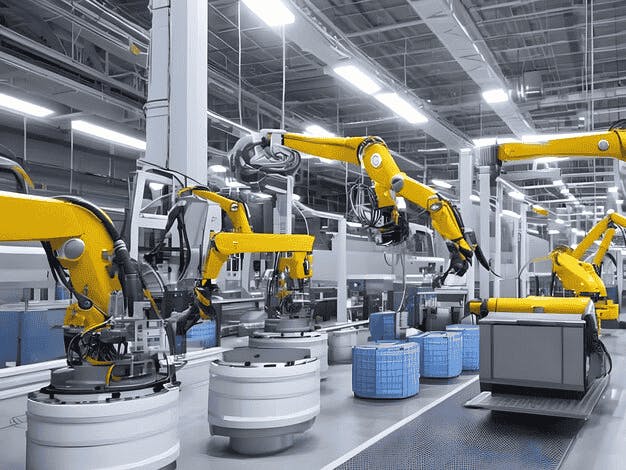
Robotics
- Spatial intelligence and navigation: robots learn to move through space, avoid obstacles, and understand a room or warehouse layout before operating in one physically.
- Task generalization across embodiments: models like GR00T transfer skills across different robot bodies (humanoids, single arms, quadrupeds) instead of retraining from scratch for each one.
- Long-horizon task planning: multi-step tasks such as assembling a product, sorting a mixed bin, or coordinating with another robot require planning several steps ahead, not just reacting frame by frame.
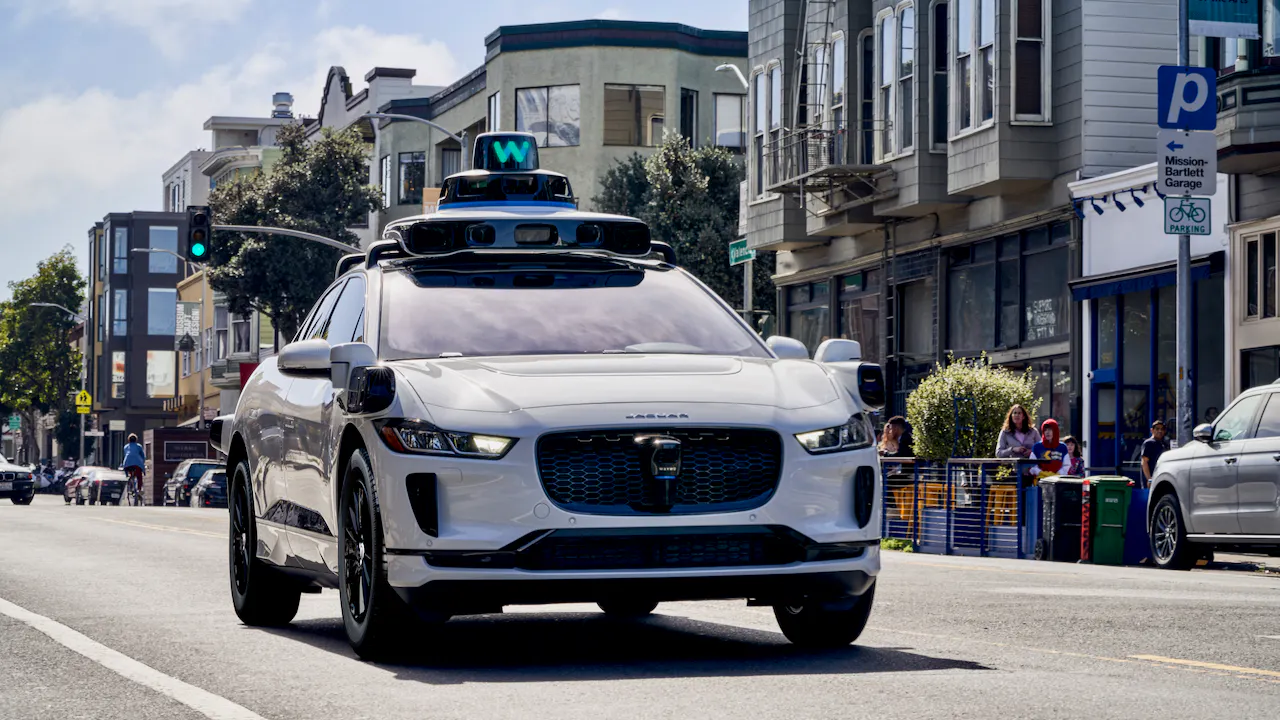
Autonomous vehicles
- Scenario and edge-case generation: generating rare but critical driving scenarios (extreme weather, unusual pedestrian behavior, sensor glare) that are difficult, dangerous, or simply rare to capture on real roads.
- Sensor fusion and calibration: simulating multiple sensor types (camera, LiDAR, radar) in the same scene to test how those streams combine into a single understanding of the environment.
- Geographic and regulatory localization: testing a driving policy against different road layouts, signage, and driving norms before expanding into a new market.
Data, evaluation, and MLOps
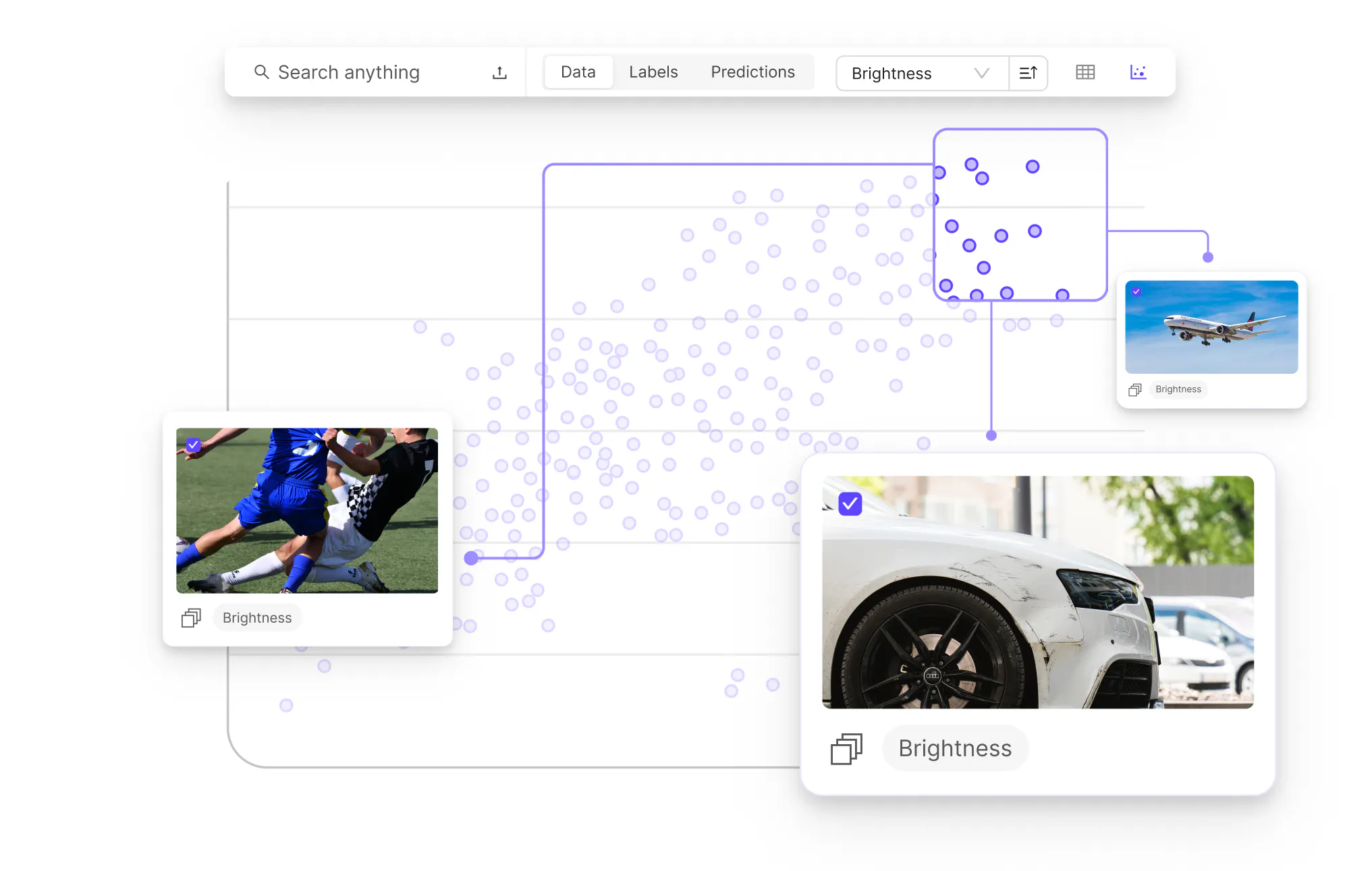
- Synthetic data generation for long-tail scenarios: filling the gap for scenarios that are hardest to collect real data for but matter most for safety.
- Policy evaluation before physical deployment: screening and ranking candidate policies in simulation, only promoting the strongest to real-world testing.
- Curation and annotation pipelines: every model in this article, WFM or VLA, depends on a curated, labeled, quality-checked video pipeline behind it. This layer is the most commonly underestimated part of a physical AI roadmap.
Adjacent and emerging use cases
- Surgical robot training (NVIDIA's ORBIT-Surgical project uses simulation for laparoscopic manipulation tasks)
- Industrial digital twins for factory and warehouse planning
- Broader embodied-agent research
Top 10 World Foundation Models in 2026
This list focuses on models most relevant to robotics, autonomous vehicles, and physical AI. It mixes true world foundation models with the closely related VLA and general-purpose world models most commonly discussed alongside them.
1. NVIDIA Cosmos 3
- Category: World Foundation Model
- What it is: NVIDIA's flagship WFM, built on a mixture-of-transformers architecture combining vision reasoning, world generation, and action prediction in one system (NVIDIA Newsroom, 2026)
- Standout feature: Cosmos Reason, a dedicated module for judging physical plausibility in generated video
- Positioning: backbone for NVIDIA's emerging World Action Models
2. NVIDIA Isaac GR00T N1.7
- Category: Vision-Language-Action model
- What it is: open, cross-embodiment VLA model for humanoid robots, licensed under Apache 2.0 for full commercial use (NVIDIA, 2026)
- Standout feature: dual-system architecture (fast action model plus a slower reasoning model)
- Training data: adds 20,000 hours of egocentric human video (EgoScale) for better generalization and language following
3. NVIDIA Alpamayo
- Category: VLA model, autonomous-vehicle focused
- What it is: an open family of models and tools for AVs, centered on Alpamayo 1, a 10-billion-parameter chain-of-thought VLA model that can explain its own driving decisions (NVIDIA Newsroom, 2026)
- Comes with: AlpaSim for simulation/testing and a dataset of over 1,700 hours of real-world driving data
- Positioning: a teacher model that AV developers fine-tune and distill into production systems, not something that runs directly in a vehicle
4. NVIDIA DreamZero
- Category: World Action Model
- What it is: built on a 14-billion-parameter video diffusion backbone, jointly predicting future world states and future robot actions in a single pass
- Reported results: more than double the generalization performance of standard VLA baselines on new tasks, plus strong cross-embodiment transfer using just 10 to 20 minutes of demonstration video (NVIDIA Research, 2026)
5. NVIDIA DreamDojo
- Category: World Foundation Model
- What it is: a generalist robot world model trained on close to 44,000 hours of egocentric human video, one of the largest datasets used for world model pretraining to date
- Reported results: more physically accurate action-conditioned predictions than a comparable Cosmos-Predict baseline (NVIDIA Research, 2026)
6. Google DeepMind Genie 3
- Category: General-purpose world model
- What it is: generates interactive 3D environments in real time at 24 frames per second and 720p resolution, with consistency maintained over several minutes (Google DeepMind, 2026)
- Standout feature: "promptable world events" that let users change conditions like weather mid-scene
7. Google DeepMind Gemini Robotics 1.5
- Category: Vision-Language-Action model
- What it is: built on the latest generation of Gemini, bringing its broader world knowledge and reasoning into direct robot control (Gemini Robotics Team, 2025)
- Standout feature: Motion Transfer, which unifies data collected across different robot platforms into a single representation space, reducing the platform-specific data needed for adaptation
8. World Labs Marble
- Category: General-purpose world model
- What it is: generates persistent, editable 3D environments from text, images, video, or rough 3D layouts, exportable to tools like Unreal Engine and Unity (World Labs, 2025)
- Standout feature: produces a stable, downloadable world rather than continuously regenerating a scene during exploration, useful for building digital twins of physical workspaces
9. Physical Intelligence pi0.7
- Category: Vision-Language-Action model
- What it is: the most real-data-heavy approach among major VLA labs, betting that direct robot interaction data (not internet video) is the strongest foundation for generalization
- Standout feature: a steerable, zero-shot learning approach built on the company's RECAP training method, which combines demonstration, correction, and self-improvement (Physical Intelligence, 2026)
10. Meta V-JEPA 2
- Category: World Foundation Model
- What it is: an open, Joint Embedding Predictive Architecture-based world model, trained on more than a million hours of video plus additional robot interaction data (Meta AI, 2025)
- Standout feature: zero-shot robotic planning, released alongside three new physical-reasoning benchmarks: IntPhys 2, MVPBench, and CausalVQA
What's Next for World Foundation Models?
Convergence: WFMs and VLAs merging into World Action Models
The clearest trend for the next 12 to 18 months is architectural convergence. NVIDIA's Cosmos 3 is already described as a backbone for World Action Models, and DreamZero demonstrates the same idea in practice: predicting the next world state and the next robot action in a single forward pass, rather than treating simulation and control as separate systems. Expect more labs to follow this pattern rather than maintaining separate WFM and VLA product lines.
| Approach | Companies | Effect on adoption |
| Open licensing / open weights | NVIDIA (GR00T, Cosmos, Alpamayo, DreamZero, DreamDojo) | Faster ecosystem uptake among developers who need to fine-tune and self-host |
| Closed or limited preview | Google DeepMind (Genie 3, Gemini Robotics) | Often leads on headline capability at launch, slower developer adoption |
| Commercial product | World Labs (Marble) | Fast go-to-market, less flexibility for self-hosting or deep customization |
The data supply chain becomes the new bottleneck
As base models get better at generating physically plausible synthetic data, the constraint shifts upstream: to how well that data is curated, labeled, deduplicated, and validated before it ever reaches training. Teams that treat data curation as an afterthought will increasingly find it's the actual limiting factor on model performance, not the choice of base architecture.
Humanoid hardware reference designs are commoditizing
NVIDIA's GR00T Reference Humanoid Robot, built on Unitree hardware and expected in late 2026, signals a shift toward standardized, off-the-shelf robot hardware that developers can build on rather than designing from scratch. If this pattern holds, more of the competitive differentiation in physical AI moves from hardware to the models and data behind them.
Key Takeaways
- Foundation models are pretrained once and adapted across many tasks. World foundation models apply that idea specifically to the physical world, predicting how environments change over time rather than generating text.
- Three distinct but converging categories exist within this space: world foundation models (Cosmos), vision-language-action models (GR00T, Gemini Robotics, pi0.7), and general-purpose world models (Genie 3, Marble).
- NVIDIA Cosmos and GR00T lead the category by splitting the problem into simulation (Cosmos) and action (GR00T), a structure the industry is now moving to combine into single World Action Models.
- The biggest practical use case remains solving the real-world data bottleneck: generating safe, scalable, physically accurate synthetic training data for robots and autonomous vehicles.
- Open models (mostly from NVIDIA) are seeing faster developer adoption than closed or preview-stage models, though closed models often lead on raw capability at launch.
- As base models improve, data curation and annotation quality are becoming the real differentiator in physical AI development, not the model architecture alone.
Frequently asked questions
A foundation model is a large AI model pretrained on broad data at scale so it can be adapted to many downstream tasks, rather than built for one narrow use case. Large language models are the best-known example, but the same approach now applies to images, audio, and, with world foundation models, the physical world.
A large language model predicts the next word in a sequence of text. A world foundation model predicts the next physical state of an environment, such as the next video frame or an object's trajectory, based on physical rules like gravity and motion.
Not exactly. GR00T is a vision-language-action (VLA) model, meaning it turns visual and language input into robot actions. It's closely paired with NVIDIA Cosmos, which is the actual world foundation model in NVIDIA's stack, but the two serve different functions.
Yes, both are released with open licensing. GR00T N1.7 is available under Apache 2.0, and Cosmos models are available for preview through NVIDIA's API catalog or download through NVIDIA NGC and Hugging Face.
A World Action Model combines world simulation and action prediction into a single system, rather than using separate models for each function. NVIDIA's DreamZero and the direction of Cosmos 3 are early examples of this approach.
They let AV developers generate and test rare or dangerous driving scenarios, such as extreme weather or unusual pedestrian behavior, in simulation before any real-world testing, reducing both cost and safety risk.
Most are trained on very large video datasets, sometimes tens of millions of hours, combined with sensor data, robot demonstration data, and in some cases egocentric human video. The scale and diversity of this data directly determines what scenarios the model can accurately simulate.