Contents
Everything About Human-in-the-Loop: Complete Guide
Encord Blog
Everything About Human-in-the-Loop: Complete Guide


Everything About Human-in-the-Loop: Complete Guide
In today's rapidly evolving AI landscape, organizations face a critical challenge: ensuring their machine learning models achieve and maintain high accuracy while adapting to real-world scenarios. Despite advances in automation, purely algorithmic approaches often fall short when confronting complex, nuanced decisions that require human judgment. This is where Human-in-the-Loop (HITL) systems emerge as a crucial bridge between artificial and human intelligence.
Human-in-the-Loop combines the computational power of machines with human expertise to create more reliable, ethical, and effective AI systems. As organizations scale their AI initiatives, the strategic implementation of HITL becomes increasingly vital for maintaining quality while managing resources efficiently. This comprehensive guide explores how HITL systems work, their benefits, implementation strategies, and best practices for optimizing their performance.
Understanding Human-in-the-Loop Systems
Human-in-the-Loop refers to a process where human judgment is incorporated into an automated system's decision-making loop. In the context of AI and machine learning, HITL systems leverage human expertise to validate, correct, and improve model outputs. This approach is particularly valuable when dealing with complex data annotation tasks, model training, and validation processes where pure automation might miss subtle nuances or context-dependent decisions.
The fundamental principle behind HITL is that while machines excel at processing vast amounts of data quickly, humans possess unique cognitive abilities, contextual understanding, and ethical judgment that machines currently cannot replicate. By combining these complementary strengths, organizations can build more robust and reliable AI systems.
The Role of Human Feedback in Model Training
Human feedback plays a pivotal role in improving model accuracy and reliability. Using Encord's annotation platform, teams can implement structured feedback loops where human experts review and correct model predictions. This process is particularly valuable during the initial training phases and when models encounter edge cases or novel scenarios.
The feedback mechanism typically involves several key components. First, human annotators review model outputs and identify errors or areas for improvement. These corrections are then fed back into the training process, helping the model learn from its mistakes. Over time, this iterative process leads to increasingly accurate predictions and more reliable model performance.
Benefits of Human-in-the-Loop in Machine Learning
Human-in-the-loop workflows are used to steadily improve model performance through structured human feedback and review at key stages of training and evaluation
- Improved model accuracy: Human reviewers catch edge cases, labeling mistakes, and misclassifications that automated systems often miss, leading to more reliable training data.
- Faster training cycles: Targeted human corrections help models adjust earlier in the loop, reducing repeated error patterns and unnecessary retraining rounds
- Reduced bias in AI systems: Human checks can surface skewed predictions and dataset imbalances, so teams can rebalance and refine labeling guidelines
- Higher data quality: Structured review stages and feedback loops improve annotation consistency and overall dataset quality over time
- Stronger evaluation signal: Human scoring and comparison judgments provide more grounded validation signals for model testing and benchmarking
When should you use human-in-the-loop?
HITL is most useful in regulated domains, edge-case-heavy datasets, and safety-critical systems where accuracy and oversight matter. It is also commonly used during model evaluation and tuning phases, where structured human feedback helps validate outputs and catch failure patterns early
Implementing HITL Systems Effectively
Successful implementation of HITL systems requires careful planning and the right tools. As explored in our analysis of multimodal AI, organizations need to consider several factors when setting up their HITL workflows.
First, establish clear quality metrics and validation protocols. Define what constitutes acceptable model performance and when human intervention is necessary. Second, develop efficient workflows that minimize bottlenecks while maintaining quality standards. Third, ensure you have the right infrastructure to support seamless collaboration between human annotators and automated systems.
Balancing Automation and Human Oversight
Finding the right balance between automation and human oversight is crucial for optimal HITL implementation. While the goal is to gradually reduce human intervention as models improve, maintaining appropriate oversight ensures quality and addresses ethical considerations.
Using Encord's active learning capabilities, organizations can intelligently prioritize which instances require human review, maximizing the impact of human expertise while minimizing unnecessary intervention. This approach helps scale annotation efforts efficiently while maintaining high quality standards.
Best Practices for HITL Implementation
Successful HITL implementation requires adherence to several key best practices. Start by establishing clear guidelines for annotators, ensuring consistency across the team. Implement regular quality checks and provide ongoing training to maintain high standards. Utilize tools that support collaborative workflows and enable efficient communication between team members.
Documentation plays a crucial role in maintaining consistency and facilitating knowledge transfer. Create comprehensive guides for common scenarios and edge cases, and regularly update these resources based on new insights and challenges encountered.
Managing Quality and Scalability
Quality management in HITL systems requires robust processes and tools. Encord's data agents provide automated quality checks and validation mechanisms, helping maintain consistency across large-scale annotation projects. Regular calibration sessions ensure annotators remain aligned with project requirements and quality standards.
Scalability considerations should include both technical infrastructure and human resource management. Plan for growth by implementing systems that can handle increased data volumes and more complex annotation requirements. Consider using automated workflows to handle routine tasks while preserving human oversight for critical decisions.
Measuring Success and Continuous Improvement
Track key metrics to evaluate the effectiveness of your HITL system. Monitor annotation quality, throughput rates, model performance improvements, and resource utilization. Use these insights to identify areas for optimization and adjust workflows accordingly.
Regular reviews of system performance help identify opportunities for automation and areas where human intervention adds the most value. This ongoing assessment ensures your HITL system evolves with your organization's needs and capabilities.
Conclusion and Next Steps
Human-in-the-Loop systems represent a crucial approach to building reliable, ethical AI systems that combine the best of human intelligence and machine learning capabilities. By following the guidelines and best practices outlined in this guide, organizations can implement effective HITL workflows that scale with their needs while maintaining high-quality standards.
To begin implementing or improving your HITL system, consider starting with a pilot project using Encord's comprehensive platform. Our tools support the entire annotation lifecycle, from initial data labeling to model validation and continuous improvement. Discover how Encord's physical AI solutions can transform your AI development workflow.
Take the next step in your AI journey by exploring Encord's suite of tools designed specifically for efficient HITL implementation. Our platform provides the infrastructure, tools, and support needed to build and scale successful HITL systems that drive real business value.
Frequently Asked Questions:
How to measure the success of HITL workflows?
Success in HITL workflows is measured by how much human feedback improves results over time. Common signals include model accuracy lift, lower error rates, higher reviewer agreement, better edge-case coverage, and reduced relabeling or rework in later training cycles.
What tools are necessary to implement HITL workflows?
Human-in-the-loop workflows typically rely on annotation platforms with built-in review and QA stages, along with model-assisted labeling features to speed up initial passes. Teams also use evaluation dashboards to monitor quality and performance, plus audit trails and version tracking to keep reviewer decisions and dataset changes traceable.
What types of feedback do humans provide in HITL workflows?
In HITL workflows, humans provide several types of structured feedback depending on the task and model stage. This includes correcting labels, ranking or scoring model outputs, tagging errors, and flagging edge or ambiguous cases for deeper review. In LLM and RLHF settings, humans may also give preference judgments between outputs to guide model tuning and evaluation.
Explore the platform
Data infrastructure for multimodal AI
Explore product
Explore our products

Index
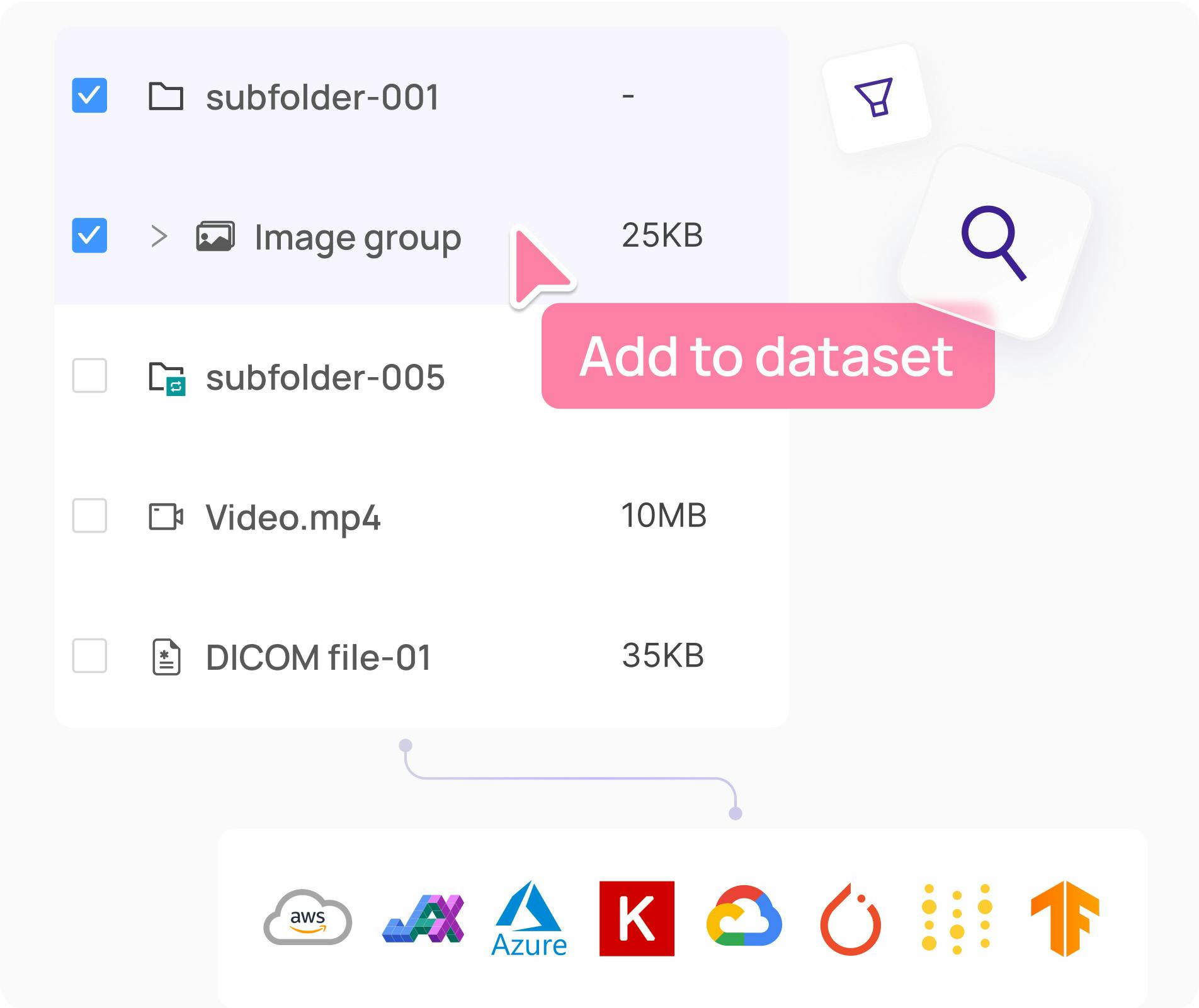
Manage & curate your data
Understand and manage your visual data, prioritize data for labeling, and initiate active learning pipelines.

Annotate
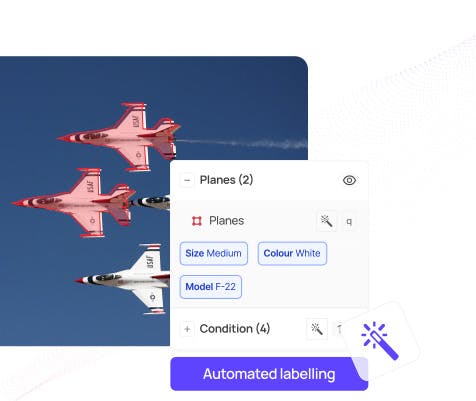
Supporting your labeling needs
Super charge your data annotation with AI-powered labeling — including automated interpolation, object detection and ML-based quality control.

Active
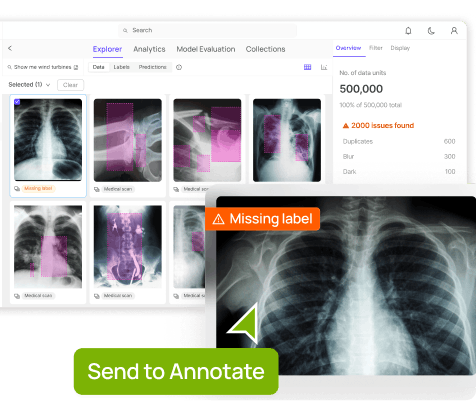
Find & fix data issues with ease
Monitor, troubleshoot, and evaluate the data and labels impacting model performance.