What Is Teleoperation Data Collection, and Why Do Robots Need It?

Robotic Learning Lead at Encord
TL;DR: Teleoperation data is what you get when a human directly drives a robot, using leader-follower arms, a VR headset, or a joystick, while every joint, camera, and sensor reading gets logged. Because a person is controlling the actual robot, the data comes out in the robot's own action space. No translation step, no guesswork. That's what makes it the gold standard for teaching robots dexterous, hands-on tasks.
Robots learning to do useful things with their hands is still mostly bottlenecked by one thing: Strong training data. You can simulate a task a million times over, but simulated environment never quite behaves like the real world does. You can watch a human do the task on video, but that video still has to be translated into something a robot can understand and successfully act on.
Teleoperation solves this bottleneck. A human drives the robot directly, so every demonstration is a real, physical, ground-truth example of the task done correctly. No sim-to-real gap, no translation layer.
This guide covers what teleoperation data actually is, why it matters, what gets recorded, how it's collected, where it gets hard, and where it's used in the real world.
What Is Teleoperation Data?
Teleoperation data is what happens when a human operates a robot directly, in person or remotely, and the robot's own sensors record the result. The human provides the judgment: what to grasp, how to approach it, where to place it. The robot's sensors capture everything else: joint angles, forces, camera feeds, and the exact commands sent to make it move.
How Is Teleoperation Different From Remote Operation?
The two terms overlap a lot, but they're not identical. Remote operation is the broader umbrella term. It covers drones, vehicles, and industrial machinery generally, not just robots. Teleoperation specifically means a human controlling a robot, often (but not always) from a distance.
How Is Teleoperation Different From Simulated or Autonomous Data?
Teleoperation, simulated, and autonomous data all solve different problems, and most serious robotics programs end up using a mix of all three.
| Method | How It Works | Strengths | Limitations | Best For |
| Teleoperation | Human directly controls the robot; sensors log the result | Real-world physics, native action space, high accuracy | Slower to scale, needs trained operators | Manipulation, grasping, fine motor tasks |
| Simulation | Physics engine generates synthetic demonstrations | Fast, cheap, near-infinite variation | Reality gap; sim physics rarely matches real contact dynamics | Pre-training, rare edge cases |
| Autonomous field collection | Robot operates on its own in deployment, logging telemetry | Captures real deployment conditions | Expensive, slow, and only useful once a baseline policy already exists | Long-horizon tasks, deployment monitoring |
| Egocentric (Human) | Human wears cameras and sensors while doing the task themselves | Cheap to scale, no robot hardware needed | Needs retargeting to map human motion onto robot kinematics | Cross-embodiment pre-training |
No single method wins outright. Most Physical AI teams combine simulation for scale, teleoperation for precision, and field data for real-world validation. Teleoperation earns its place on that list because it's the only method that skips the translation step entirely.
That said, combining data from different robots and sources works better than you might expect. Open X-Embodiment, a dataset that pools together more than one million trajectories from 22 different robot platforms, showed that policies trained on this kind of diverse, cross-embodiment data transfer better to new robots and tasks than policies trained on a single robot's data alone (O'Neill et al., 2024).
Why Does Teleoperation Data Matter So Much for Robot Training?
Does Teleoperation Really Close the Sim-to-Real Gap?
Yes, and the reason is simple: it's not simulated at all. It's the real robot, real contact forces, real friction, real lighting. There's no physics engine trying to approximate what happens when a gripper closes around a wet plate. It just happens, and gets recorded.
Why Does "Native Action Space" Matter?
This is the part that makes teleoperation genuinely different from most other data collection methods. When a human drives the robot directly, the recorded trajectory already matches the robot's own joints and kinematics. There's no coordinate transform to run, no embodiment-transfer math, no guesswork about how a human hand motion should map onto a robot gripper. What was recorded is exactly what the robot needs to replay.
Early work on low-cost bimanual teleoperation systems showed just how far this can go. Hardware that matched the robot's own action space directly was able to train fine-grained manipulation policies from just a few dozen demonstrations per task (Zhao, Kumar, Levine and Finn, 2023).
Does Teleoperation Actually Improve Task Success Rates?
There's a good real-world example of this. Researchers combined mobile teleoperation data with existing static manipulation datasets through a process called co-training, and task success rates on new mobile manipulation tasks improved by up to 90% (Fu, Zhao and Finn, 2024). That's not a small bump. It's the difference between a robot that occasionally completes a task and one you can actually rely on.
Is Teleoperation Data Already Labeled?
Mostly, yes. Every timestep carries the operator's control signal as a built-in ground-truth action label. Compare that to egocentric video, which usually needs a separate, expensive annotation pass before a model can use it. With teleoperation, the label is already baked into the collection process itself.
What Data Gets Captured During a Teleoperation Session?
Teleoperation isn't just a video of a robot moving around. Every session logs several synchronised data streams at once, and each one feeds a different part of model training.
- Joint positions and velocities: full robot pose over time, sampled fast
- End-effector pose (6-DoF): the exact position and orientation of the gripper or tool
- Gripper state and grip force: when it opens, closes, and how hard it's gripping
- Force-torque at the wrist: contact force, resistance, and load, the stuff you can't see in video
- Synchronised RGB-D camera feeds: wrist-mounted and external views, color plus depth
- Operator control inputs: the raw commands sent through whatever interface the operator is using
| Data Stream | What It Captures | Why It Matters | Used For |
| Joint positions/velocities | Full robot pose over time | Lets the model reconstruct exactly how the task was physically performed, step by step | Trajectory reconstruction |
| Gripper/tool position and orientation | Gripper/tool position and orientation | The most direct signal for "where should the hand be right now" | Manipulation policy training |
| Gripper force/state | Grasp timing, contact events | Distinguishes a confident grasp from a fumble, which matters a lot for fragile or deformable objects | Grasp and force-sensitive tasks |
| Force-torque (wrist) | Contact and insertion forces | Vision alone can't tell you how hard something is being pushed or inserted | Fine manipulation, assembly tasks |
| RGB-D camera feeds | Visual and depth context | Gives the model spatial awareness beyond a flat 2D image | Multi-view policy architectures |
| Operator control inputs | Raw commands sent to the robot | This is the ground-truth action label itself, so no annotation is needed | Ground-truth action labeling |
This is also why teleoperation data tends to cost more per episode than passively collected data. You're not just recording video. You're capturing a full multimodal record of exactly how a task was physically executed, down to the force behind every grip.
It's also possible to collect a version of this data without a full robot present at all. Portable systems that use handheld grippers instead of full robot hardware, while still recording action-labeled trajectories in a robot-compatible format, have made it possible to collect this kind of multimodal demonstration data outside a lab (Chi et al., 2024).
What Interfaces Do Operators Actually Use to Control the Robot?
The interface an operator uses changes how natural the demonstrations feel, and that shows up directly in data quality.
- Leader-follower arms: the operator physically moves a matching "leader" arm, and the robot mirrors it in real time. This feels natural, gives force feedback, and generally produces the smoothest demonstrations.
- VR controllers: the operator wears a headset and sees the robot's camera feed, controlling the gripper through hand movements in 6-DoF space. Useful when the operator can't be physically near the robot.
- Joysticks, SpaceMouse, and custom hardware: used when a team already has an existing teleoperation stack, or the task doesn't need full-arm kinesthetic control.
The interface someone uses for data collection is only half the story. The other half is what actually goes wrong once you start collecting at scale.
What Are the Biggest Challenges in Collecting Teleoperation Data?
- Latency: a lag between what the operator does and what the robot executes, which shows up as jittery, unnatural demonstrations
- Operator variability: two people doing the "same" task rarely move identically, and that inconsistency ends up baked into the training data
- Interface-dependent quality: leader-follower, VR, and joystick setups all produce noticeably different demonstration characteristics
- Synchronization at scale: keeping six or more data streams perfectly aligned gets harder the more sessions you run
- Embodiment mismatch: data collected on one robot doesn't always transfer cleanly to a different one
- Turning raw episodes into training-ready data: someone still has to classify, clean, and route every single episode
- Scaling across tasks and environments: without the cost spiraling out of control
Which Industries Use Teleoperation Data, and Why?
- Warehousing and logistics: picking, sorting, and palletizing tasks that need consistent, precise handling across thousands of repetitions a day
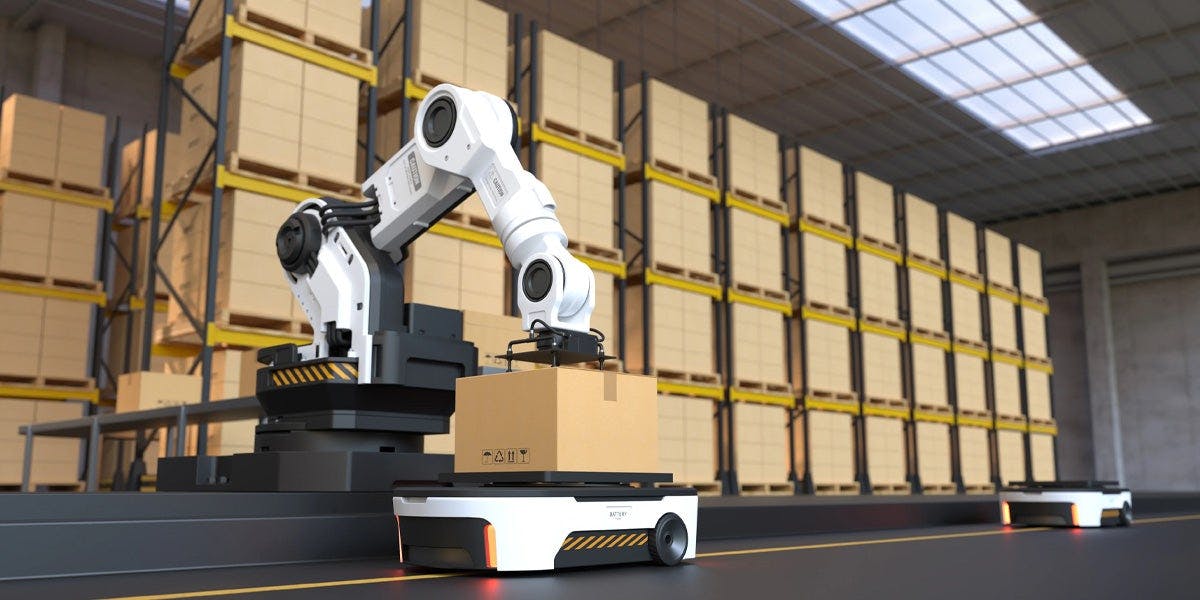
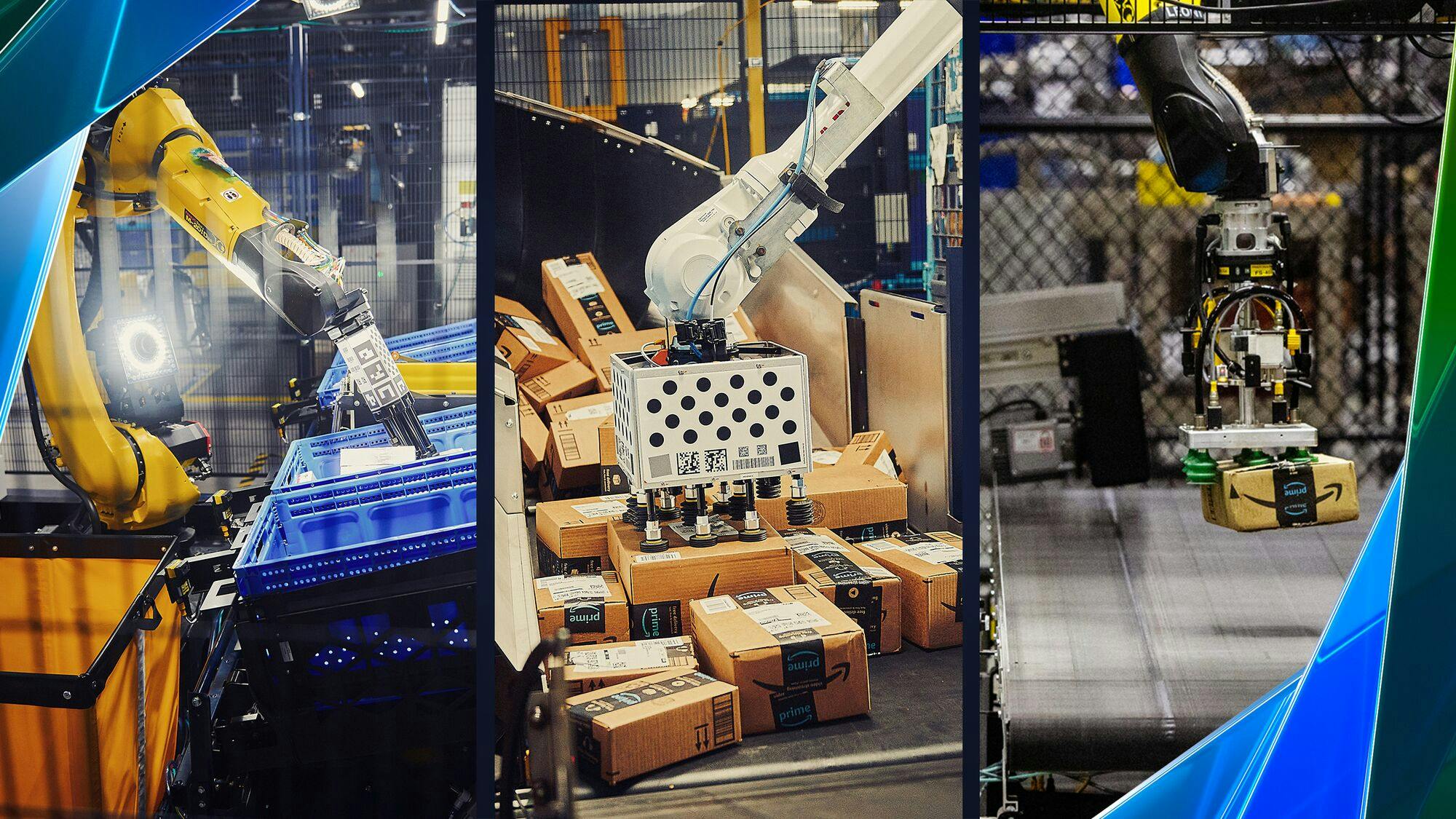
- Manufacturing: assembly, inspection, and tasks with tight tolerances, where a robot has to place or fasten something exactly the same way every time
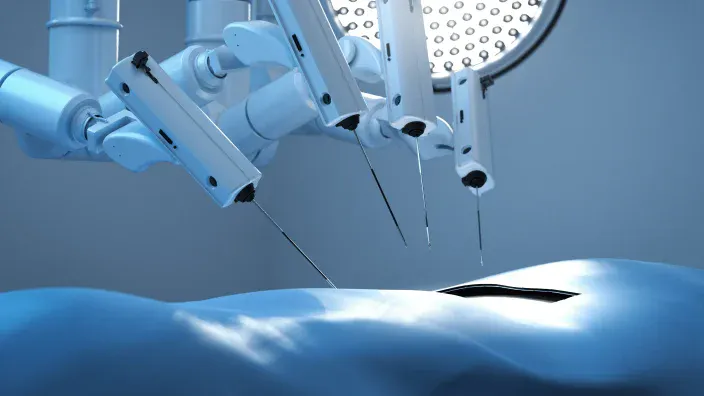
- Healthcare and surgical robotics: precision manipulation where mistakes aren't an option, and the margin for error in a real procedure is measured in millimeters
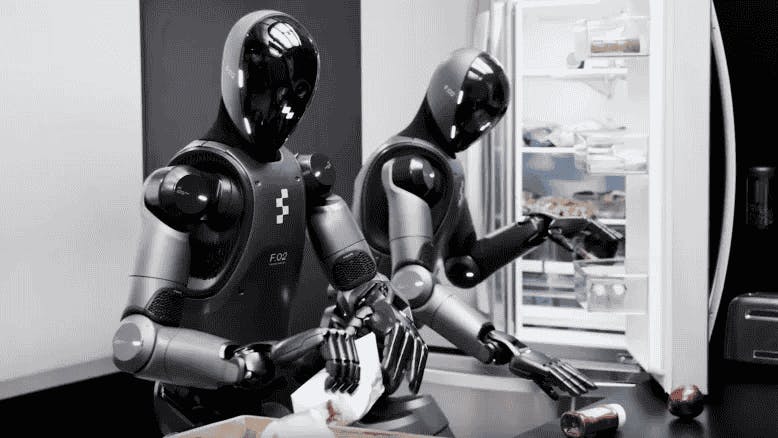
- Home and service robotics: humanoids and domestic robots learning everyday tasks like loading a dishwasher, folding laundry, or navigating a cluttered kitchen, environments that are far less predictable than a factory floor
- Field and autonomous vehicle robotics: a smaller slice today, but growing, particularly for edge-case handling, situations too rare or too risky to rely on simulation alone
Vision-language-action models trained on large, teleoperation-derived manipulation datasets have shown they can generalize instructions across multiple robot platforms, rather than needing a separate model built from scratch for every robot (O'Neill et al., 2024). That cross-platform generalization is a big part of why manufacturers and logistics companies are investing in this kind of data now, rather than waiting.
How Does Encord Collect Teleoperation Data?
Encord runs teleoperation data collection through leader-follower machines operated by trained in-field operators, working across kitchens, warehouses, and industrial settings. Collection happens through dedicated Bay Area lab facilities with configurable pods, standardized RGB-D and IMU camera rigs, and multi-camera sync built in from the start.
Every protocol is designed and piloted at Encord's own facilities first, before anything scales into the field. That means tasks, hardware setup, and quality criteria get worked out in a controlled environment, so time and budget aren't spent recollecting data that doesn't match the training objective.
Once collection starts, there's no ingestion overhead to deal with. Data flows straight into the Encord platform, ready to filter, curate, or route to annotation. And when a model fails in deployment, that failure gets captured through remote teleoperation and fed back into the collection pipeline, so the next round of data actually addresses what's breaking in the real world.
If you're scoping a teleoperation data collection project, talk to Encord's Physical AI team about what a pilot protocol could look like for your robot.
Key Takeaways:
- Teleoperation data comes from a human driving a real robot, not a simulation and not a video of a person doing the task
- It's captured in the robot's native action space, so there's no retargeting or embodiment-gap problem
- It's still the best method for tasks that need real dexterity, like grasping, inserting, and assembling
- Quality comes from protocol design and operator training, not just how much data you collect
- The hard parts are latency, operator variability, and getting everything synchronized at scale
- Warehousing, manufacturing, healthcare, and home robotics all lean on it heavily
Get Teleoperation Data For Your Robot Training
Tell us your robot platform, control interface, and target tasks. Encord will design the collection protocol, run it through trained operators, and deliver training-ready datasets, synchronized, classified, and ready for your pipeline.
Frequently asked questions
Teleoperation data comes from a human directly controlling the robot itself, with joints, cameras, and sensors logged in the robot's own action space. Egocentric data comes from a human performing the task themselves, wearing sensors, with no robot involved. Teleoperation is closer to what the robot will actually do, but it's slower and more expensive to collect since it needs the physical robot and a trained operator. Egocentric data scales faster, but adds a translation gap between human and robot embodiment that has to be corrected for later.
XDOF is one of the more established examples, organizing its programs around a data pyramid with teleoperation on the target deployment robot as the highest-value tier, down to egocentric human data as the widest and cheapest layer. It's a useful framework for thinking about data quality tradeoffs, though how well any tier generalizes still depends heavily on the specific task and robot.
A vendor gets you volume and operator expertise faster, particularly if you don't already have teleoperation hardware or trained staff. The tradeoff is less control over exactly how episodes are structured, and a handoff point between collection and whatever platform you use for annotation and QA. Collecting in-house gives more control but requires building and maintaining the operator pipeline yourself, which is a real cost most teams underestimate going in.
No. Mecka AI focuses on egocentric capture, paying people to perform everyday tasks like making coffee or fixing a car while wearing body sensors, rather than operating a robot directly. That makes it a different tier of the data stack from teleoperation: cheaper and faster to scale, but further from the robot's actual action space, so it typically needs more processing and validation before a model can train on it reliably.
It depends more on task diversity than raw volume. A narrow manipulation task might need a few hundred well-varied episodes, while a general-purpose policy needs data across many tasks, environments, and failure cases. Teams often overinvest in total hours collected and underinvest in variation, which is usually the bigger lever for generalization.