What Is Multi-Object Tracking (MOT)?
Multi-Object Tracking (MOT) is a computer vision task that detects multiple objects in a video and assigns each one a consistent identity across frames, so a system knows not just what is in the scene, but which specific instance it's looking at from one moment to the next.
Unlike single-object tracking, where a model follows one target through a video, Multi-Object Tracking (MOT) must handle a variable number of objects appearing, disappearing, occluding one another, and re-entering the frame, all while keeping their identities intact.
This is what powers use cases like counting pedestrians crossing a street, tracking every vehicle in a traffic scene, or following multiple people through a warehouse camera network without losing or swapping their IDs.

Source: Datature
Why Multi-Object Tracking matters for Physical AI
Multi-Object Tracking (MOT) sits at the core of almost every Physical AI system that has to reason about a dynamic environment over time:
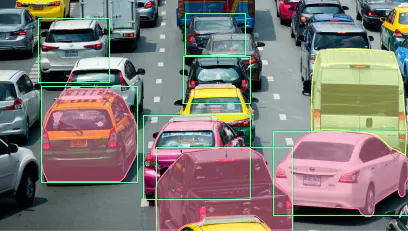
- Autonomous vehicles and ADAS: tracking surrounding vehicles, cyclists, and pedestrians across frames to predict trajectories and avoid collisions
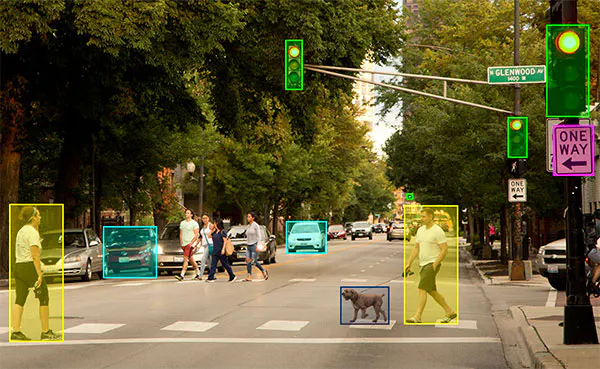
- Robotics: following multiple humans or objects in a workspace to plan safe motion paths
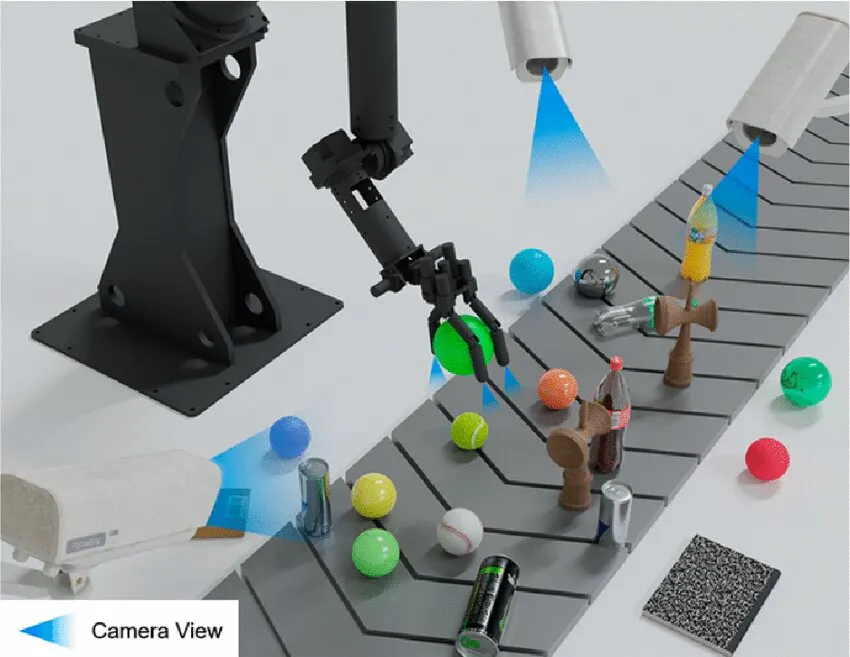
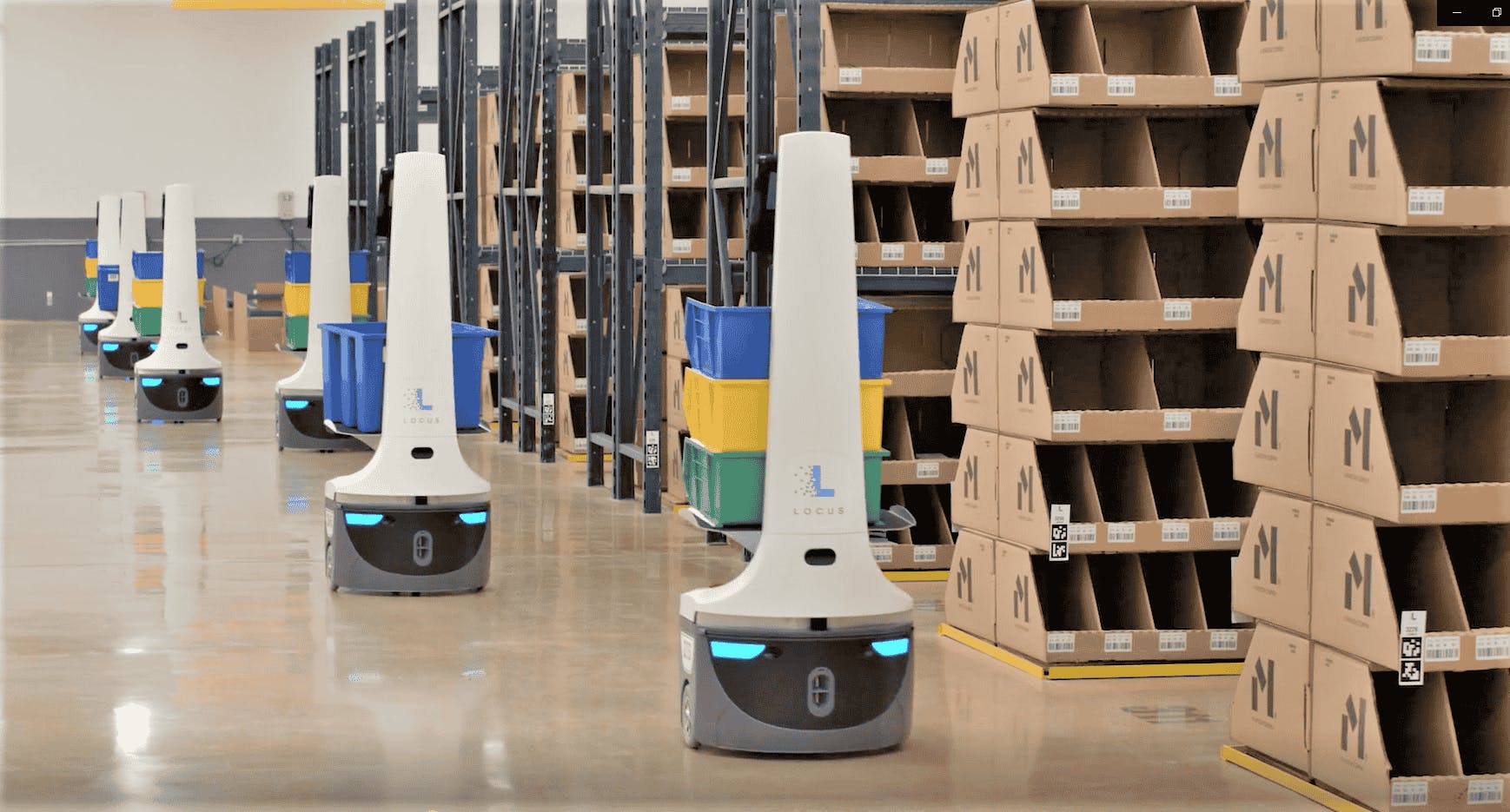
- Warehouse and logistics: tracking pallets, forklifts, and workers across camera feeds for safety and throughput analytics
- Sports and broadcast analytics: tracking every player and the ball across a match

- Smart cities and surveillance:monitoring crowd flow, vehicle counts, and anomaly detection across multi-camera networks
- Retail analytics:tracking shoppers to understand movement patterns and dwell time
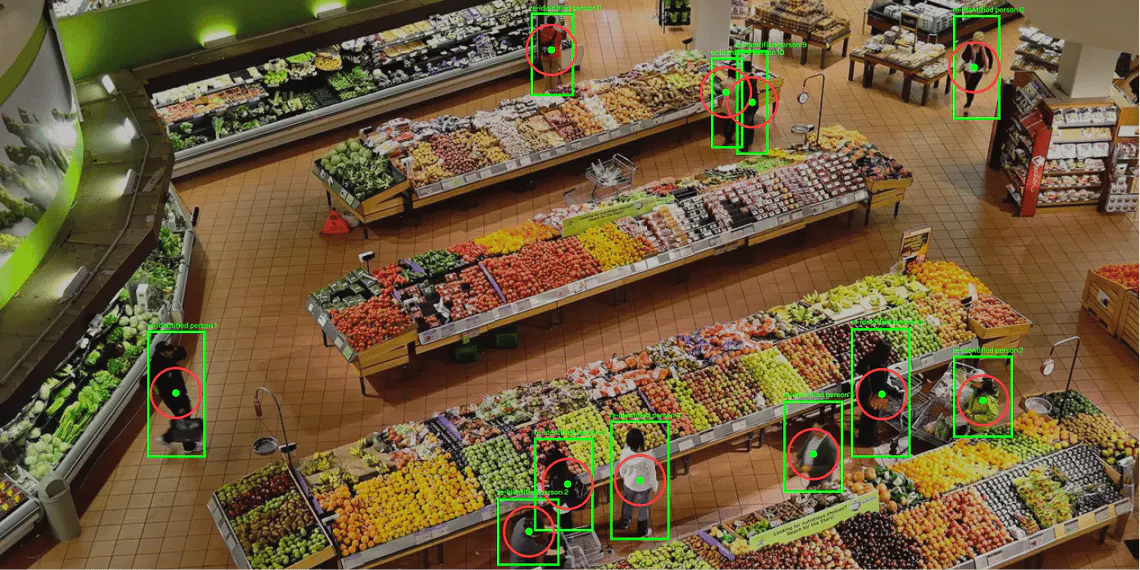
In each case, detecting objects frame-by-frame isn't enough, the system needs temporal identity to generate meaningful downstream signals like speed, trajectory, dwell time, or behavior over time.
How Multi-Object Tracking works
Most modern MOT systems follow a tracking-by-detection paradigm, which breaks the problem into two stages:
- Detection : an object detector (e.g., YOLO, Faster R-CNN, DETR-based models) identifies all objects of interest in each individual frame, producing bounding boxes or masks.
- Association: a tracking algorithm links detections across consecutive frames to the same object identity, typically using a combination of:
- Motion prediction: (e.g., Kalman filters) to estimate where an object should appear next
- Appearance features: (e.g., re-identification embeddings) to match objects by visual similarity
- Spatial overlap: (e.g., IoU matching) between predicted and detected boxes
- Data association algorithms: (e.g., the Hungarian algorithm) to solve the optimal matching between tracks and new detections
Common MOT algorithms and frameworks
- SORT (Simple Online and Realtime Tracking): a lightweight baseline combining Kalman filtering with IoU-based matching
- DeepSORT : extends SORT with a learned appearance embedding for more robust re-identification through occlusion
- ByteTrack: associates both high- and low-confidence detections, improving tracking through partial occlusions and crowded scenes
- OC-SORT / StrongSORT / BoT-SORT : newer variants that improve motion modeling and camera-motion compensation
- Transformer-based trackers (e.g., TransTrack, MOTR) : treat detection and association jointly within an end-to-end architecture, rather than as two separate stages
Key challenges in Multi-Object Tracking
- Occlusion : objects temporarily blocked from view need to be re-identified correctly once they reappear, without being assigned a new ID
- ID switches: when two objects cross paths or move similarly, trackers can mistakenly swap their identities
- Crowded or dense scenes: high object density increases the difficulty of correct association
- Camera motion: moving or multi-camera setups complicate consistent tracking across viewpoints
- Scale and appearance variation: objects changing size, pose, or lighting across frames
Multi-Object Tracking and training data
Because MOT models depend on both accurate per-frame detection and temporally consistent identity labels, they require video annotation workflows that go beyond static image labeling.
This typically means:
- Frame-by-frame or interpolated bounding box / segmentation annotation
- Persistent object ID labeling across the full video sequence
- Occlusion and re-entry handling in the labeling workflow itself
- Quality control for ID consistency, not just per-frame label accuracy
This is where purpose-built video annotation tools matter: labeling MOT training data manually, frame by frame, doesn't scale, and general-purpose image annotation tools aren't built to preserve object identity across thousands of frames. Encord's video annotation platform supports object tracking natively, including interpolation, re-identification after occlusion, and automated pre-labeling, to help teams build the high-quality, temporally consistent datasets that MOT models need.
{{Training_data_CTA::Annotate, Manage, and Curate Data at Scale for Warehouse Automation Systems with Encord}}