What Are World Models? A Guide to AI's Next Leap in Physical Reasoning

Co-Founder & CEO at Encord
TL;DR: World models are AI systems that predict what happens next in the physical world, not just the next word in a sentence. They let robots and self-driving cars "imagine" the outcome of an action before taking it, which makes them safer, faster to train, and less dependent on expensive real-world trial and error. The biggest bottleneck isn't the model architecture anymore. It's the quality and diversity of the data behind it.
For the last few years, AI progress has mostly been a language story: bigger context windows, better reasoning, more fluent text. But underneath that, a different shift has been building, and it's the one that actually matters if you want a robot to pick up a coffee cup without crushing it or dropping it. That shift is world models.
World models are trained to predict the next state of reality, not the next word. Give one a scene and a hypothetical action, and it shows you what happens next, in 3D space, over time, with physics intact. That sounds like a small distinction. In practice, it's the difference between an AI that can talk about the world and one that can operate inside it.
This guide covers in detail what a world model actually is, how it's different from an LLM and from a VLA, its core architecture, including JEPA and why data, not architecture, is the real bottleneck
What is a world model?
A world model is an AI system trained to understand and simulate how the physical world behaves: objects, space, time, and cause and effect.
Feed it an image, a video clip, or a robot's current camera view, and it predicts what happens next, grounded in real physical rules rather than guesswork.
The key difference from a typical generative video model:
- A generative video model tries to produce something that looks realistic.
- A world model tries to be right.
It reasons about things like:
- What happens if a ball rolls off a table
- What happens if a robotic gripper closes around a piece of fruit
- What happens if the car ahead brakes suddenly
That reasoning is what lets robots, self-driving cars, and drones plan an action before taking it, instead of learning purely through costly (and sometimes dangerous) trial and error in the real world.
World models vs. the alternatives
World models vs. LLMs
Large language models are excellent at manipulating text: syntax, semantics, predicting the next word across huge amounts of context.
What they lack is grounded, physical intuition.
An LLM can describe what happens when you drop a glass. It has no internal sense of the glass falling, accelerating, hitting the floor, and shattering.
World models flip that. They're built to reason about physics, 3D space, and time, which is exactly what an embodied agent needs to weigh the consequences of an action before it commits.
World models vs. VLAs
This distinction is easy to miss, but it changes everything downstream:
| Model | Predicts | Data it can learn from |
| VLA (Vision-Language-Action model) | What the robot does | Labeled robot demonstrations only |
| World model | What happens when it does it | Egocentric video, third-person footage, even non-robotics internet video |
Because a world model is learning how the world evolves rather than mimicking one "correct" action, it can learn from a much wider range of data than a VLA can.
We dug into this at length with Dyna Robotics and Agility Robotics on a recent panel.
The Key Insights: Vision Language Action Models and world models aren't competitors. World models increasingly act as the infrastructure around a VLA, generating training data, running evaluations, and simulating outcomes before a policy ever touches a real robot
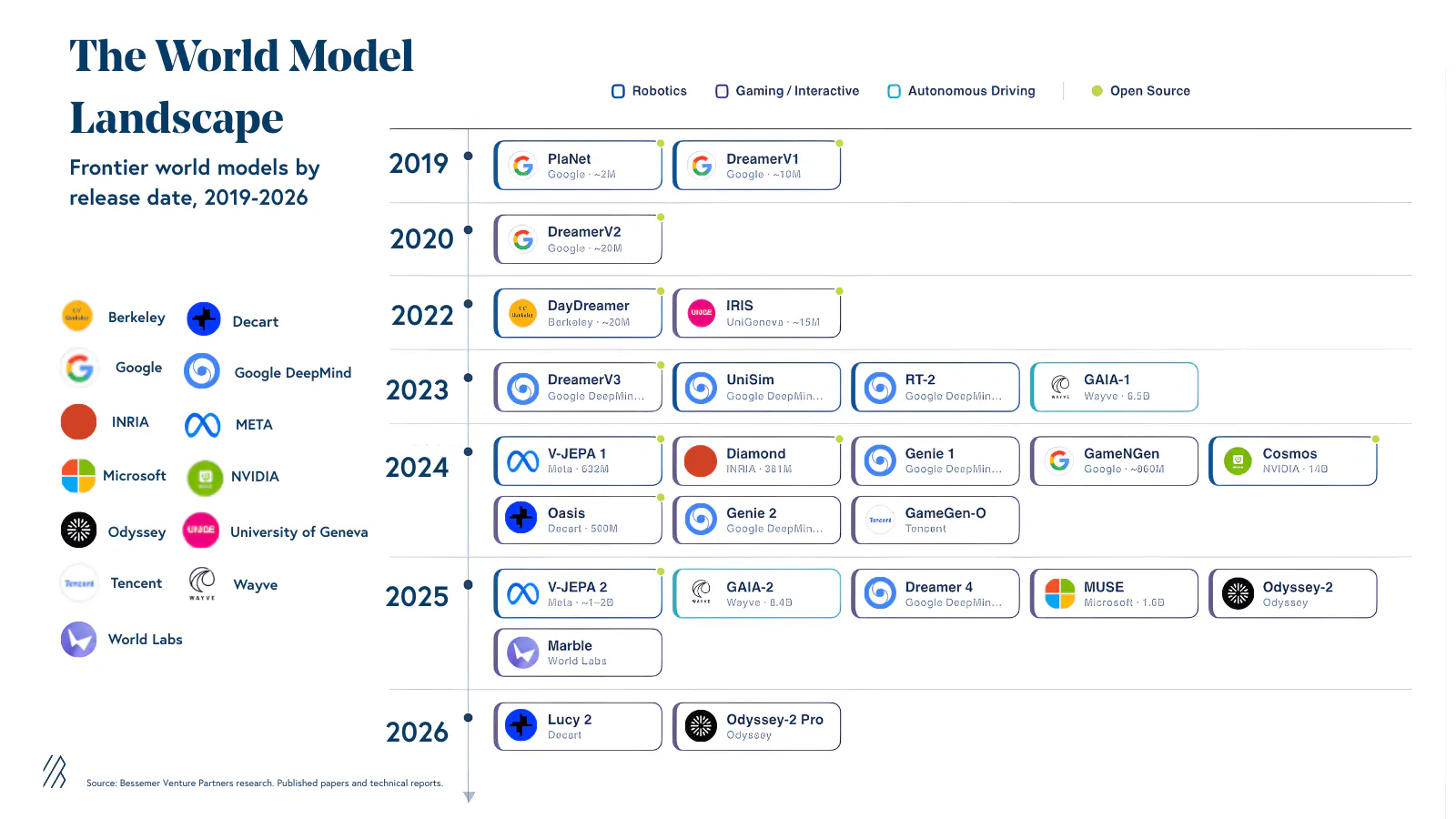
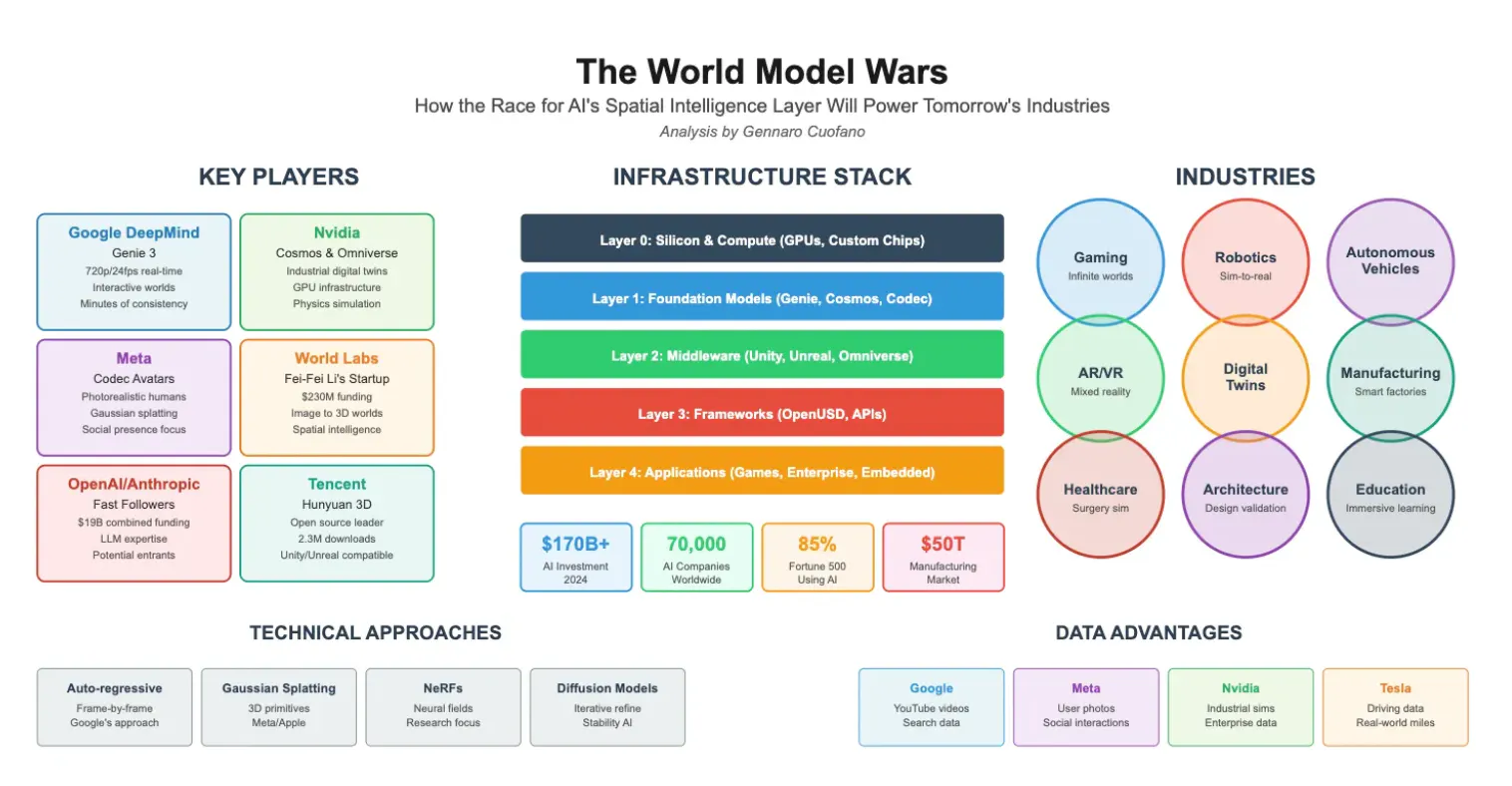
Key players and the current landscape of World Models
World models have moved quickly from being a research concept to an active product in the last two years. A handful of labs are setting the pace, each with a different angle:
| Organization | Focus | What they're building |
| Google DeepMind | Real-time interactive environments | The Genie series, including Genie 3, which generates playable, persistent world environments in real time |
| World Labs | Spatial intelligence and 3D generation | Founded by Fei-Fei Li; building models like Marble that generate consistent, navigable 3D environments |
| NVIDIA | Simulation infrastructure | The Cosmos platform: open-weight world foundation models aimed at giving robotics and AV teams a simulation base to build on |
Each of these takes a different bet on where the value sits: DeepMind is optimizing for interactivity, World Labs for spatial consistency, NVIDIA for open infrastructure teams can build on.
Core mechanics and architecture of World Models
Strip away the branding, and every world model is solving three problems:
- Seeing: turning raw sensor input into something usable
- Remembering and predicting: building an internal picture of the scene and forecasting what's next
- Acting: conditioning that prediction on a specific hypothetical action
Vision / Perception
The model needs a compressed, usable representation of what's in front of it, pulled from camera frames, LiDAR, or other sensors. This is the raw input layer, and its quality sets a ceiling on everything downstream.
Memory / Prediction
From that perception, the model builds an internal representation of the scene that persists and updates over time, then uses it to forecast what happens next. This is what makes it a model of the world, rather than a single-frame classifier.
Action Conditioning
Predictions aren't generic. They're tied to a specific hypothetical action:
- If the gripper closes now
- If the vehicle steers left
- If the leg plants here
That conditioning is what turns a passive prediction engine into a planning tool.
Learning in latent spaces (JEPA and beyond)
Processing full-resolution video frame by frame is too slow for a robot that needs to react in real time. This is why architectures like Joint Embedding Predictive Architecture (JEPA) map raw visual input into compact, simplified representations instead.
In practice, this means the model:
- Ignores irrelevant noise: a flickering screen or a moving shadow doesn't matter, so it gets filtered out
- Focuses on object affordances: it keeps the geometric and causal details that matter, like where an object can be gripped
- Runs the math faster: predicting a shift in a compact space takes a fraction of the compute that pixel-perfect video rendering would need
How world models are built
You don't need a research background to see why this next part matters commercially. It's where the real bottleneck lives.
| Stage | What happens | Why it matters |
| Data curation & tokenization | Filter, annotate, deduplicate, and compress raw video/sensor data into training-ready tokens | Sets the ceiling on model quality, bad data means confidently wrong predictions |
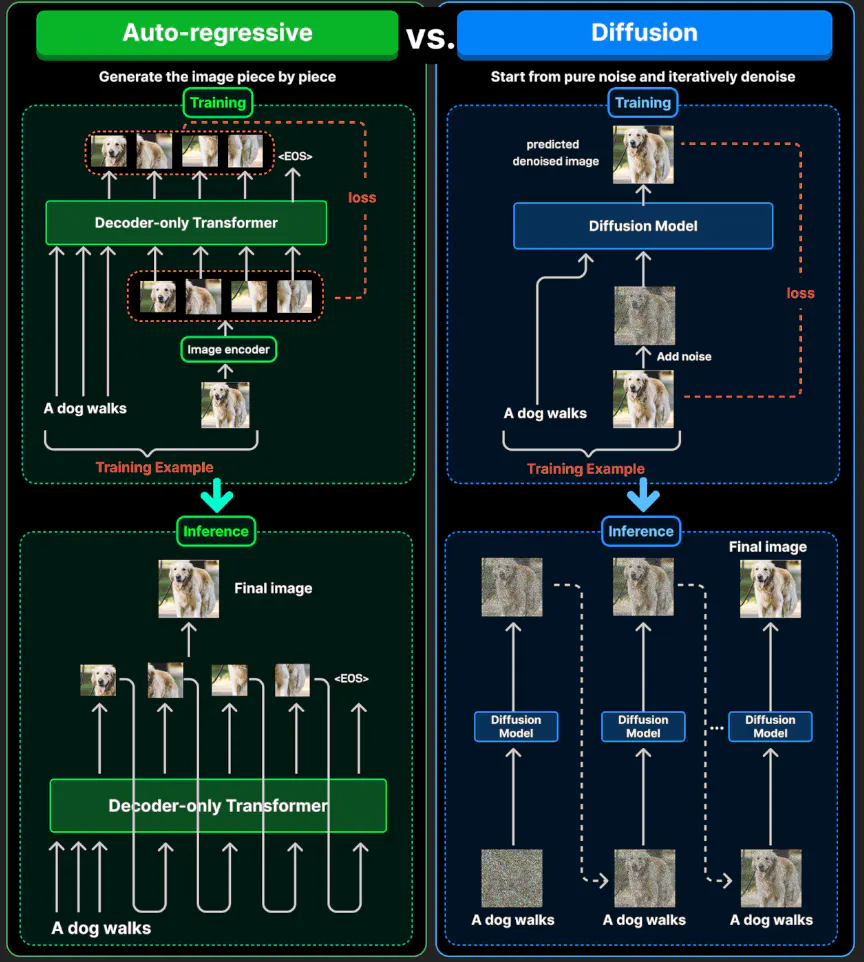
| Pretraining | Train on massive, general data using autoregressive or diffusion transformers | Builds the model's baseline understanding of physics and space |
| Post-training | Fine-tune the generalist model on your own proprietary, domain-specific data | Where real competitive advantage gets built |
Data curation and tokenization
Before a world model can learn anything, its training data has to be filtered, annotated, deduplicated, and organized at scale, then converted into the compact tokens it actually trains on.
This step isn't glamorous, but it's the single biggest lever on model quality. A world model trained on poorly curated data will confidently predict outcomes that don't make physical sense.
Pretraining approaches
Two architectural families dominate:
- Autoregressive transformers generate the future frame by frame, each one conditioned on everything before it, similar to how a language model predicts the next word. Strongest for sequential decision-making and long-horizon planning.
- Diffusion transformers start from noise and denoise the entire scene at once. Strongest for visual fidelity and generating rich, realistic synthetic environments.
Neither is strictly better. Teams often pick based on whether they need planning accuracy or visual realism.
Post-training and the data flywheel
A pretrained world model is a generalist. Getting it to perform well on a specific robot, in a specific environment, requires post-training on proprietary data. This is where the real competitive advantage gets built.
Teams that turn this flywheel faster (deploy → collect → retrain → redeploy) compound their advantage over teams simply waiting for bigger pretrained checkpoints to arrive.
How are world models used in AI and robotics?
Robots use world models to test hundreds of potential actions inside their own latent space, in a split second, before committing to one in the physical world. By "imagining" the future first, a robot avoids mistakes that would be expensive, dangerous, or irreversible if made for real.
- Action-conditioned rollouts: the robot feeds in its current camera frame plus a hypothetical motor command. The model outputs the expected resulting scene.
- Trajectory optimization: instead of evaluating one action at a time, the system samples multiple action sequences, scores each simulated outcome, and picks the best one.
- Safety filters: if a proposed action results in a simulated collision or failure, the controller rejects it before it ever reaches the physical actuators.
What industries benefit most from world models and simulations?
| Domain | What the world model does |
| Logistics & Manufacturing | Predicts how soft or slippery materials (fabric, produce) will shift under pressure, so the gripper adjusts force continuously |
| Autonomous navigation & driving | Projects multiple possible futures for a busy intersection, so the vehicle can slow down or steer clear of a hazard before it happens |
| Humanoid Robotics | Compares sensor feedback against physical expectations in real time, so robots can recover balance on mud, gravel, or ice |
| Smart Cities & Video Analytics | Simulates crowd movement and traffic flow to anticipate congestion or incidents before they escalate |
| Industrial simulation | Lets teams test equipment layouts, failure scenarios, and process changes virtually before touching a physical line |
The real bottleneck is Data, not Model Architecture
Most of the public conversation about world models focuses on model design: JEPA, diffusion, autoregressive transformers. But teams actually building these systems will tell you the real constraint sits somewhere else entirely, in the data itself.
There are three data problems worth understanding here, and they build on each other.
Problem 1: Most data pipelines throw away the most useful data
World models can learn from almost any video with visual continuity. That includes:
- Egocentric (first-person) footage: the fastest-growing data source right now
- Third-person footage: less talked about, but far more abundant, and it captures things a first-person view simply misses
- Failure data: footage of things going wrong
That third category matters more than it sounds. A Vision Language Action Model needs clean examples: action in, correct outcome out. So when something goes wrong during data collection, that clip usually gets thrown away.
A world model doesn't have that restriction. It's not learning "the correct action", it's learning how the world responds to any action. That means a failed grasp or a near-collision is just as useful to it as a successful one.
Problem 2: Simulation is cheap, but it doesn't match reality
Training in simulation is fast, safe, and far cheaper than collecting real-world data. The catch is what's known as the sim-to-real gap: a policy trained in a simulated environment often falls apart the moment it's deployed in the real world, because the simulation wasn't physically or visually accurate enough.
World models help close this gap. They convert physics-based simulations into output that's more photorealistic and more physically consistent, so what a robot learns in simulation actually holds up once it's out in the field.
Problem 3: Whoever iterates faster, wins
Put the first two problems together and you get a cycle: deploy a robot, collect its data (including the failures), retrain the model, deploy the improved version, and repeat.
Every robotics team already knows this cycle exists. Fewer teams optimize for the thing that actually matters: how fast you can move through it. A team that completes this loop in weeks will out-learn a team sitting on a bigger dataset but a slower pipeline.
From Research to Production: the deployment gap
None of this matters if it can't survive a real deployment. There's a well-documented gap between a robot performing well in a 24-hour demo and a robot performing reliably every day, for a month, in production.
That gap comes down to a few unglamorous but critical problems:
- Observability
- Runtime performance monitoring
- Handling unpredictable model outputs
- Being able to triage quickly when performance degrades in a new environment
These aren't research paper problems. They're systems problems, and they're exactly where a lot of promising world model work stalls before it reaches the field.
How Encord supports world model development
Key takeaway: World models are only as good as the data pipeline behind them. Curation quality, data diversity, and iteration speed matter more than architecture choice at this point.
That's the layer Encord operates at:
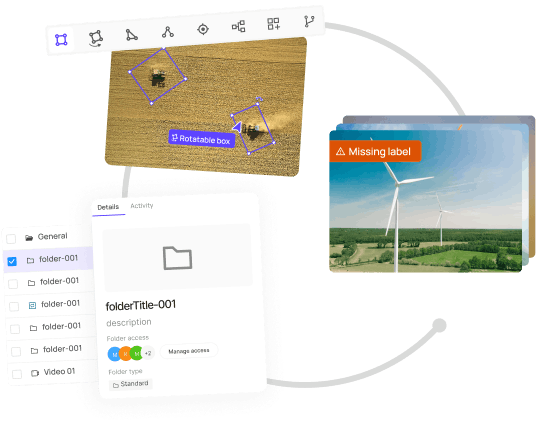
- Annotation and labeling for the multimodal, large-scale video and sensor data world models are trained on
- Data curation and indexing to filter, deduplicate, and organize training data at scale
- Physical AI data services purpose-built for robotics, autonomous vehicles, and other embodied AI use cases
- Post-training alignment to help teams specialize pretrained world models on their own proprietary data
If you're building in this space, curating data for robotics, autonomous systems, or any other Physical AI domain, this is exactly what we're built for.
Book a demo to see how Encord fits into your world model pipeline, or explore the platform yourself.
Frequently asked questions
As of 2026, large world models (LWMs) have moved from generating static video clips to producing interactive, physically grounded simulators that predict how entire environments respond to an action over time. Real-time interactive models like Google DeepMind's Genie 3 and spatial generation models like World Labs' Marble represent the current frontier, shifting the focus from passive video generation to persistent, navigable simulated worlds.
A world model is an AI system trained to understand and simulate how the physical world works — objects, space, time, and cause and effect. Instead of predicting the next word like a language model, it predicts the next state of a scene, grounded in real physical behavior rather than pattern-matching on text.
A VLA (Vision-Language-Action model) predicts what action a robot should take next. A world model predicts what will happen if it takes that action. This means a VLA needs labeled robot demonstrations to learn from, while a world model can learn from a much broader range of data, including footage that has nothing to do with robots at all. In practice, the two are increasingly complementary: world models often generate the training data and run the simulations that VLAs are then trained and evaluated on.