Logistics Data Labeling: the 6 best platforms and where they fit [2026]

Co-Founder & CEO at Encord
TL;DR: Logistics data labeling is how teams annotate the video, LiDAR, sensor, document, and barcode data that warehouse, transport, and automated-machinery AI learns from. Encord is the most complete platform for it, built for multimodal data with automation, compliance, and end-to-end workflow management.
AI is reshaping logistics, from autonomous forklifts and warehouse drones to freight routing, predictive maintenance, and automated document processing. None of it works without precisely labeled data.
Logistics is harder to label than most domains because the data is multimodal and high-stakes. A single workflow can span warehouse video, LiDAR point clouds for navigation, telemetry from robots and conveyors, scanned shipping documents, and barcode or RFID streams. Get the labels wrong and a forklift misreads an aisle or a customs form gets misclassified.
Choosing the right platform is the difference between a pilot that scales and one that stalls. Below is what logistics data labeling actually covers, the data types involved, and the 6 best platforms for logistics and automated machinery AI in 2026.
See how multimodal labeling comes together for logistics and automated machinery AI.
What is logistics data labeling?
Logistics data labeling is the process of annotating the video, LiDAR, sensor, document, and barcode data that logistics and supply-chain AI systems learn from. It teaches models to detect pallets, track forklifts, read shipping labels, navigate warehouses, and flag anomalies on a line, by tagging real-world objects and events in raw operational data.
A data labeling platform is the software that makes this possible at scale. It lets teams label images, video, LiDAR, sensor, and document data, then manage quality, automation, and review across large multimodal datasets.
Platforms like Encord add AI-assisted labeling, QA, and workflow management so labeling keeps pace with production.
What types of logistics data need labeling?
Logistics AI rarely runs on one data type. Most production systems label across five:
- Video: warehouse, port, and factory camera feeds for object tracking, safety monitoring, and process analysis.
- LiDAR and 3D point clouds: navigation and obstacle detection for autonomous forklifts, AMRs, and yard vehicles.
- Sensor and telemetry data: robot, conveyor, and machinery streams for predictive maintenance and anomaly detection.
- Documents: scanned bills of lading, customs forms, invoices, and proof-of-delivery, labeled for OCR and key-value extraction.
- RFID and barcode: inventory and shipment tracking data tied back to video and sensor context.
The platforms that win in logistics are the ones that handle these in one synchronized workflow rather than forcing a separate tool per modality.
Logistics data labeling use cases
3 use cases drive most logistics labeling demand:
- Transportation and freight. Models for route optimization, fleet monitoring, and driver-assist need labeled video and LiDAR from vehicles, plus telemetry. This is where "data labeling for the transportation industry" usually starts.
- Warehouse and fulfillment. Autonomous forklifts, picking robots, and safety systems rely on labeled video and 3D data of aisles, pallets, and people, often combined with barcode and RFID tracking.
- Document and OCR processing. Freight runs on paperwork. Labeling bills of lading, customs declarations, and invoices trains models to extract fields automatically and cut manual data entry across the supply chain.
Choosing the Right Data Labeling Platform
The right platform depends less on raw labeling speed and more on whether one tool can cover all your logistics data without forcing handoffs between systems. Five criteria separate the options:
- Modality coverage. Logistics data is rarely one type. Check that the platform handles video, LiDAR and 3D, sensor and telemetry, and documents in the same project, not through separate tools you have to stitch together.
- Automation and QA. AI-assisted labeling, frame interpolation for moving machinery, and built-in review workflows are what keep labeling costs flat as volume scales. Manual-only tools fall over fast in warehouse and fleet data.
- Deployment and data security. Industrial and operational data is often sensitive or competitively valuable. Decide early whether you need cloud, on-prem, or a deployment that keeps data on site, and confirm the vendor's compliance posture (SOC 2, GDPR, HIPAA where relevant).
- Workflow management at scale. Role-based tasks, dashboards, and QA monitoring matter once you move past a pilot and have multiple annotators working across sites.
| Use Case | Recommended Platform |
| End-to-end multimodal warehouse AI | Encord |
| Multi-camera + 3D sensor fusion | Segments.ai |
| High-volume logistics video labeling | Scale AI |
| Small automation pilots | Kili Technology |
| Custom or open-source workflows | CVAT |
| On-prem, secure deployments | Label Studio |
1. Encord (End-to-End Multimodal Platform)
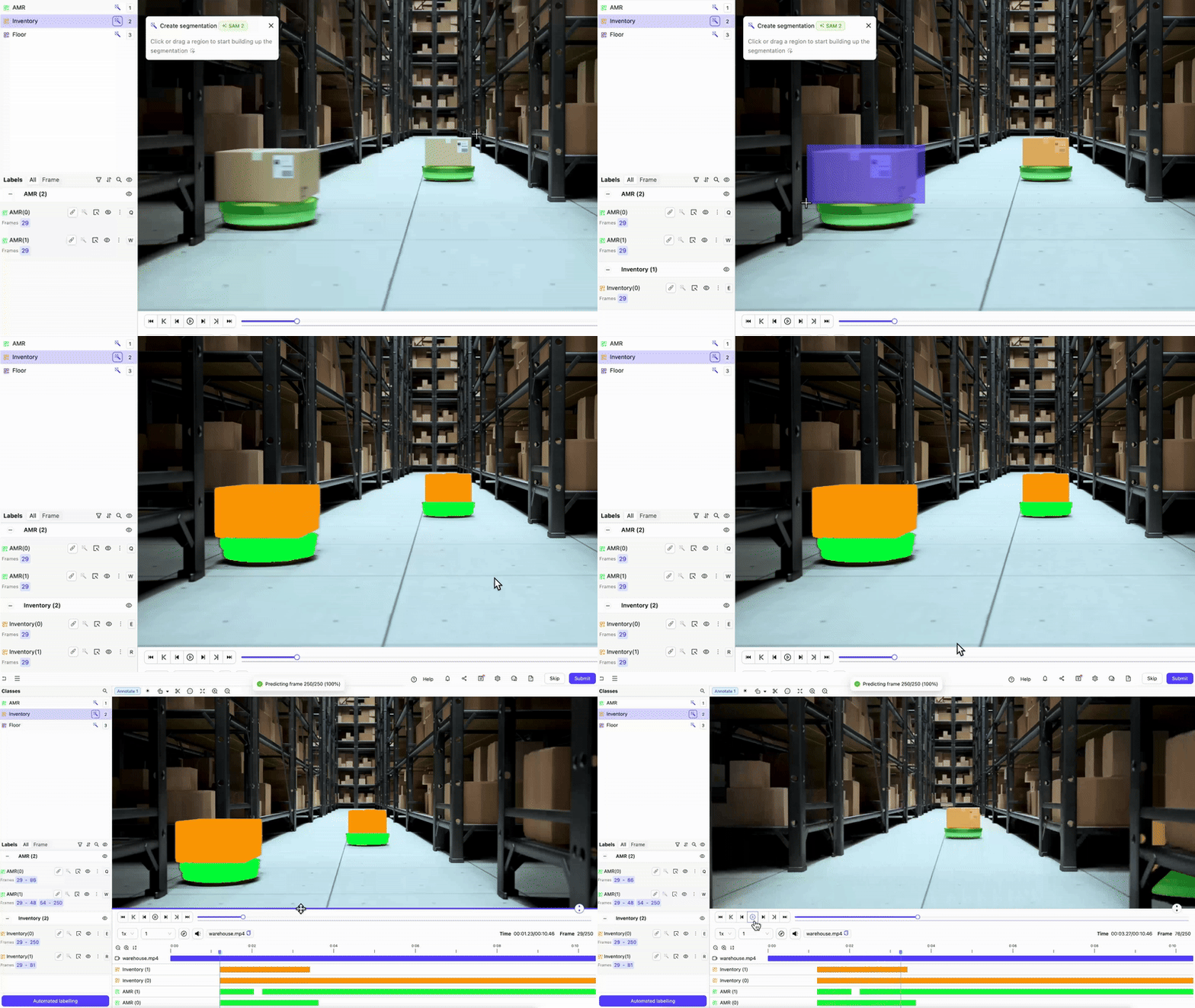
Encord is built for enterprise-scale operations with multimodal workflows. It can handle video, LiDAR, sensor data, and more, making it ideal for autonomous warehouse vehicles and industrial machinery monitoring.
Key features:
- Annotate video, 3D, LiDAR, and images - among other modalities (text, image, audio, DICOM)
- Automation: AI-assisted labeling and frame interpolation for moving machinery
- Workflow management: dashboards, role-based tasks, QA monitoring, & agentic workflow for greater automation
- Compliance: SOC 2, GDPR, HIPAA which are key important for industrial and employee data
Best for: Logistics companies and industrial operators needing end-to-end data ops.
2. Segments.ai (2D + 3D Fusion for Robotics & Machinery)
Segments.ai shines when you need synchronized multi-view labeling, which is great for automated forklifts, drones, and conveyor monitoring.
Key features:
- Sync camera feeds with LiDAR/3D data
- Track moving objects or inventory in real time
- Semi-automated frame interpolation
- Collaborative dataset management and versioning.
Best for: Multi-sensor warehouse or factory automation projects.
3. Scale AI (High-Volume Warehouse Annotation)
Scale AI excels at high-throughput labeling and has historically supported large-scale logistics operations like autonomous vehicles in ports and warehouses.
Key features:
- Dense video annotation and object tracking
- Bounding boxes, segmentation, and trajectory labeling for forklifts and drones
- Human-in-the-loop QA for accuracy at scale
- Integrates with ML pipelines for predictive maintenance or path optimization
Best for: Logistics operators handling massive video datasets.
4. Kili Technology (Lightweight Robotics & Video Annotation)
Kili Technology is ideal for smaller teams or pilot projects. It supports motion tracking and annotation without requiring complex infrastructure.
Key features:
- Annotate video, images, and sensor data
- Automation using pre-labeling models like SAM
- Simple team collaboration and task assignment
Best for: Startups and small automation teams testing new AI workflows.
5. CVAT (Open-Source Industrial Annotation)
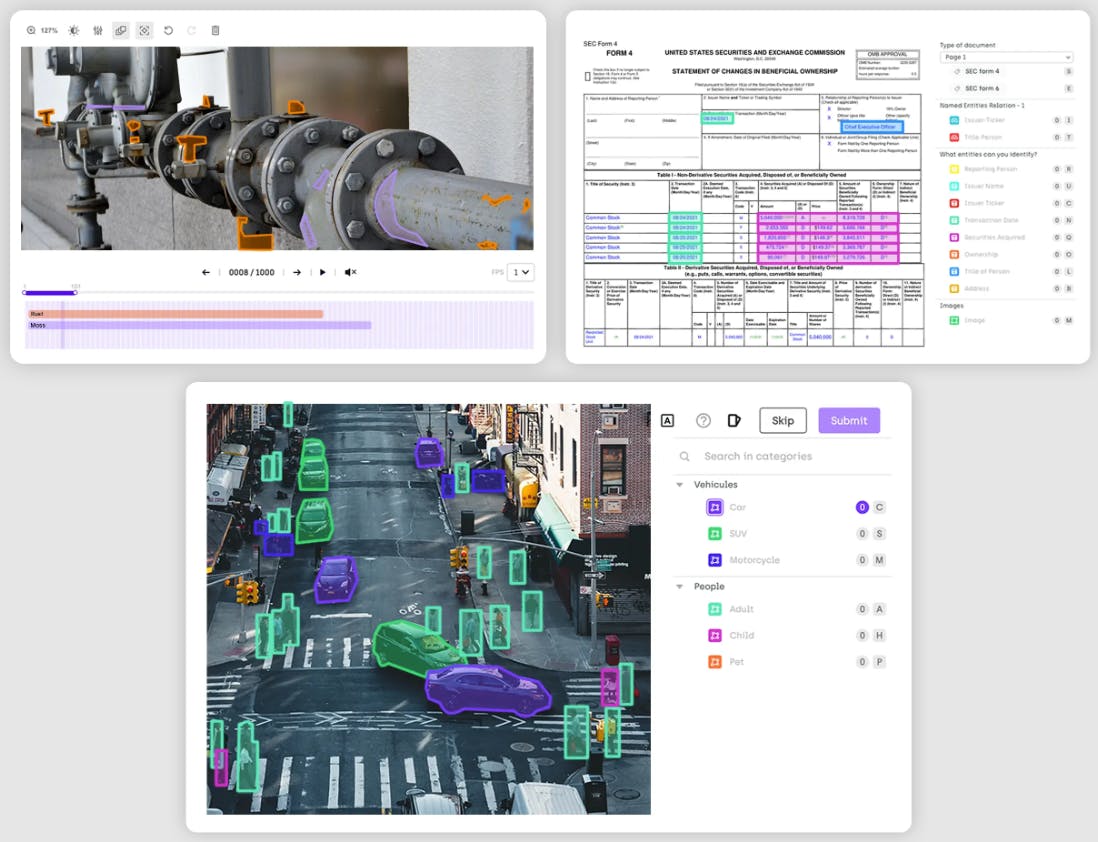
CVAT is widely used for research and custom projects in logistics and automated machinery. It allows full flexibility for tailored annotation pipelines.
Key features:
- Bounding boxes, polygons, cuboids, and trajectory labeling
- Customizable for proprietary sensors or camera setups
- Integration with your own AI models for semi-automated labeling.
Best for: Research labs or teams needing customizable open-source solutions.
6. Label Studio (Flexible, Open-Source Annotation for Robotics & Logistics)
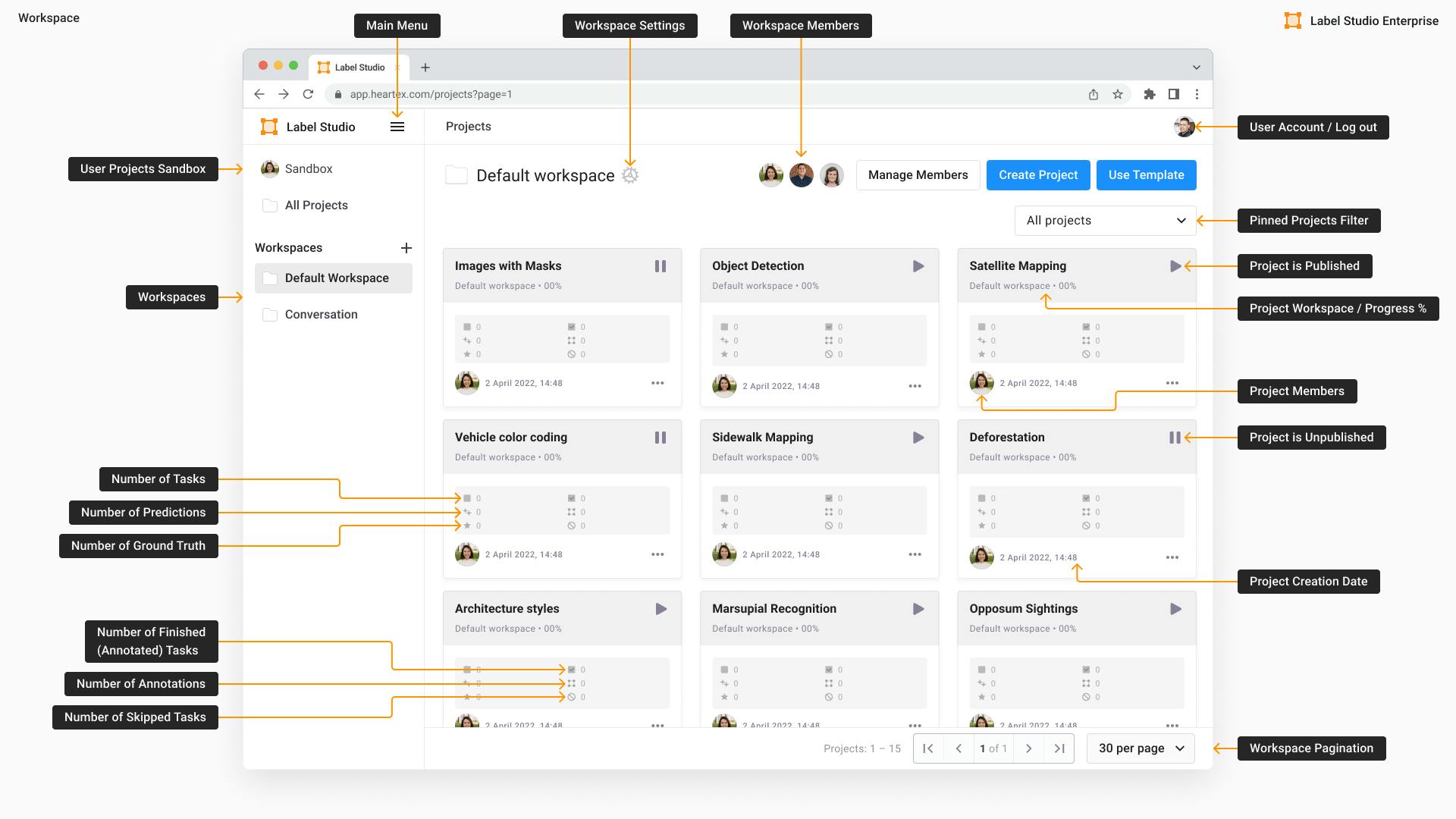
Label Studio is one of the most flexible and customizable data labeling platforms, making it a strong choice for logistics and robotics projects that involve multiple data types and deployment constraints. Its open-source foundation and enterprise edition provide teams with the ability to adapt workflows to very specific industrial use cases.
Key features:
- Multi-modal support: For robotics projects that combine camera feeds with telemetry or machine logs.
- Custom workflows: Build specialized annotation interfaces and task pipelines tailored to your industrial environment
- Model-in-the-loop: Integrate your own ML models for pre-labeling and active learning
- Deployment flexibility: Open-source or enterprise deployment options, including on-premises setups for factories and warehouses where data can’t leave the site.
Best for: Robotics and logistics teams that need on-prem deployment for sensitive industrial or operational data.
Why Encord leads in logistics and automated machinery AI
In logistics and industrial automation, teams need more than labeling—they need full data infrastructure. Encord delivers:
- Multimodal support (video, LiDAR, sensors, telemetry, 3D)
- Automation for repetitive labeling tasks
- End-to-end workflow management from labeling to dataset QA
- Enterprise-grade compliance for sensitive operational data
For autonomous forklifts, warehouse AI, and industrial robotics, Encord is the most complete data labeling platform in 2026.
Key takeaways
- Logistics data labeling spans five data types: video, LiDAR/3D, sensor and telemetry, documents, and barcode/RFID.
- The hardest part is multimodal: production systems need these labeled in one synchronized workflow, not one tool per modality.
- Document and OCR labeling (bills of lading, customs forms, invoices) is an underserved but high-demand logistics use case.
- Vet vendor status as part of due diligence. Scale AI's ownership changed in 2025, which matters for teams with sensitive operational data.
- Encord is the most complete option for logistics because it handles video, LiDAR, document, and sensor data with automation, QA, and enterprise compliance in one platform.
Explore more resources
Guides:
- Supply chain automation
- Best data labeling platforms for each AI use case
- Best data labeling platform (2026 buyer's guide)
- 12 best data labeling companies
- How to automate data labeling
- Data labeling platforms for smart cities
Product and solutions
Frequently asked questions
AI systems in logistics rely on high-quality labeled data to recognize objects, navigate warehouses, detect anomalies, and coordinate machinery. Without precise labeling of video, LiDAR, and sensor data, AI models can fail in real-world, high-stakes environments like ports, factories, or warehouses.
Encord stands out because it’s built for multimodal, enterprise-scale workflows. Unlike many platforms that specialize in only video or images, Encord supports video, 3D LiDAR, sensors, and more. Combined with AI-assisted automation, advanced workflow management, and enterprise-grade compliance (SOC 2, GDPR, HIPAA), it’s the most complete solution for logistics and machinery AI.
Encord allows teams to synchronize and annotate across modalities—for example, aligning warehouse video footage with LiDAR point clouds and telemetry data. This multimodal capability is essential for training AI systems like autonomous forklifts or robotic arms that depend on multiple sensor inputs.
While CVAT and Label Studio are excellent for research or customizable workflows, they often require heavy internal engineering. Encord, on the other hand, provides an end-to-end, production-ready platform which is ideal for scaling real-world AI in logistics and industrial automation without the overhead of building and maintaining your own infrastructure.