What is Embodied AI? A Guide to AI in Robotics

Co-CEO at Encord
TL;DR: Embodied AI is artificial intelligence with a physical body, robots, vehicles, or devices that perceive, act, and learn through real-world interaction rather than data alone. It powers warehouse robots, self-driving cars, and humanoids like Figure 03, and increasingly runs on vision-language-action (VLA) models. The market is projected to grow from $4.44B in 2025 to $23B by 2030. (MarketsandMarkets) The common thread: every embodied system depends on high-quality multi-modal sensor data.
Consider a boxy robot nicknamed “Shakey” developed by Stanford Research Institute (SRI) in the 1960s. This robot was named “Shakey” for its trembling movements. It was the first robot that could perceive its surroundings and decide how to act on its own.
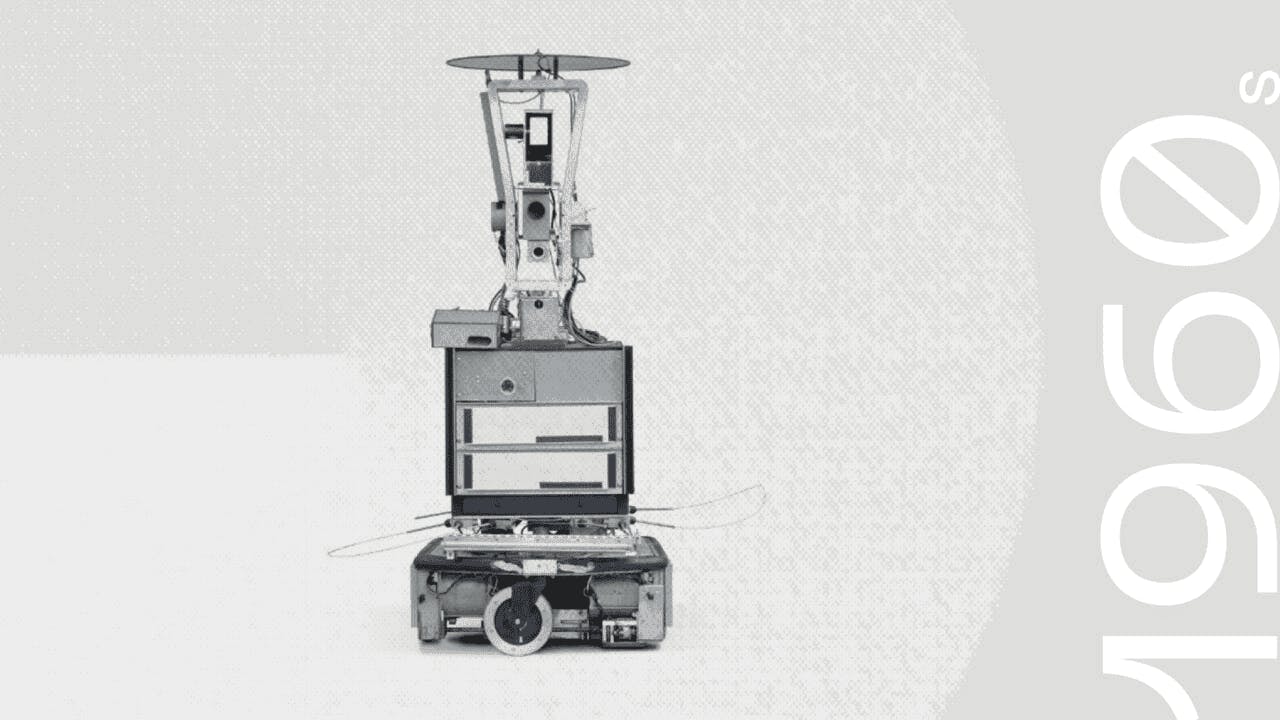
Shakey Robot (Source)
It could navigate hallways and figure out how to go around obstacles without human help. This machine was more than a curiosity. It was an early example of giving artificial intelligence a physical body. The development of Shakey marked a turning point as artificial intelligence (AI) was no longer confined to a computer, it was acting in the real world.
The concept of Embodied AI began to gain momentum in the 1990s, inspired by Rodney Brooks's 1991 paper, "Intelligence without representation." In this work, Brooks challenged traditional AI approaches by proposing that intelligence can emerge from a robot's direct engagement with its environment, rather than relying on complex internal models. This marked a significant shift from earlier AI paradigms, which predominantly emphasized symbolic reasoning. Over the years, progress in machine learning, particularly in deep learning and reinforcement learning, has enabled robots to learn through trial and error to enhance their capabilities. Today, Embodied AI is evident in a wide range of applications, from industrial automation to self-driving cars, reshaping the way we interact with and perceive technology.
What is Embodied AI?
Embodied AI is artificial intelligence housed in a physical body, a robot, vehicle, or device that can sense its environment, act within it, and learn from the results. Unlike software-only AI that processes data passively, embodied AI improves through real-world interaction: perceiving, moving, and adapting the way humans and animals learn through experience. A modern day example of embodied AI in a humanoid form is Phoenix, a general-purpose humanoid robot developed by Sanctuary AI. Like Shakey, Phoenix is designed to interact with the physical world and make its own decisions. Phoenix benefits from decades of advances in sensors, actuators, and artificial intelligence.
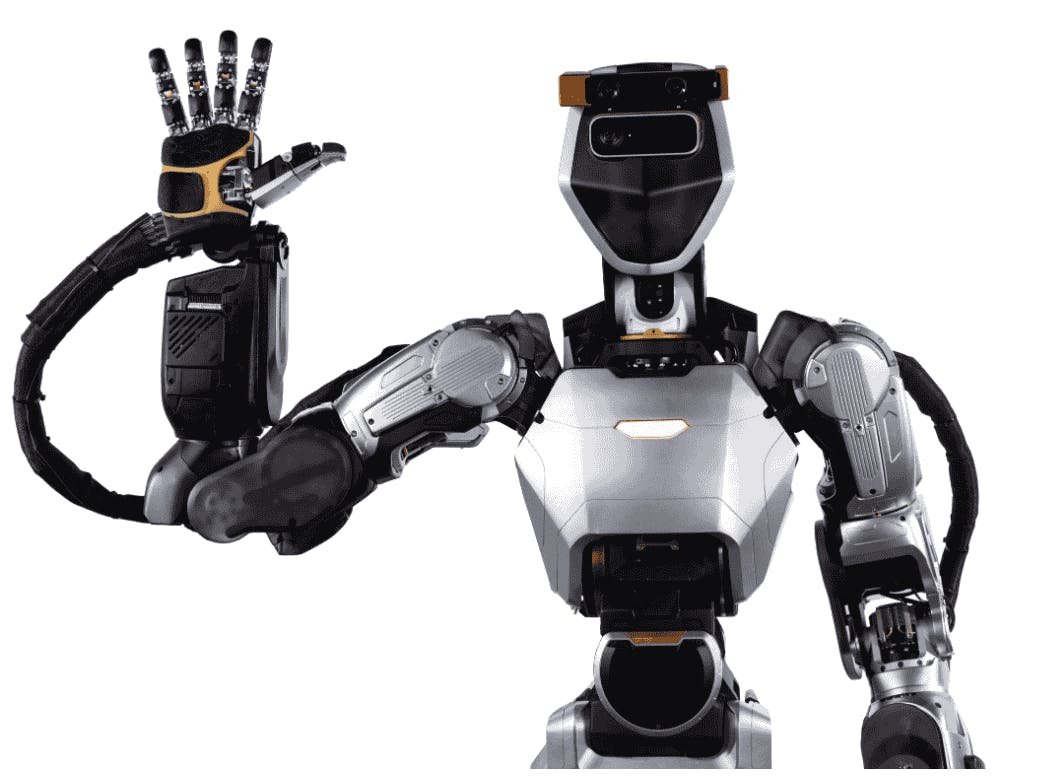
Phoenix - Machines that Work and Think Like People (Source)
The idea comes from the "embodiment hypothesis," introduced by Linda Smith in 2005. This hypothesis says that thinking and learning are influenced by constant interactions between the body and the environment. It connects to earlier ideas from philosopher Maurice Merleau-Ponty, who wrote about how perception is central to understanding and how the body plays a key role in shaping that understanding.
In practice, Embodied AI brings together areas like computer vision, environment modeling, and reinforcement learning to build systems that get better at tasks through experience. A good example is robotic vacuum cleaners Roomba. Roomba uses sensors to navigate its physical environment, detect obstacles, and learn the layout of a room and adjust its cleaning strategy based on the data it collects. This allows it to perform actions (cleaning) directly within its surroundings, which is a key characteristic of embodied AI.
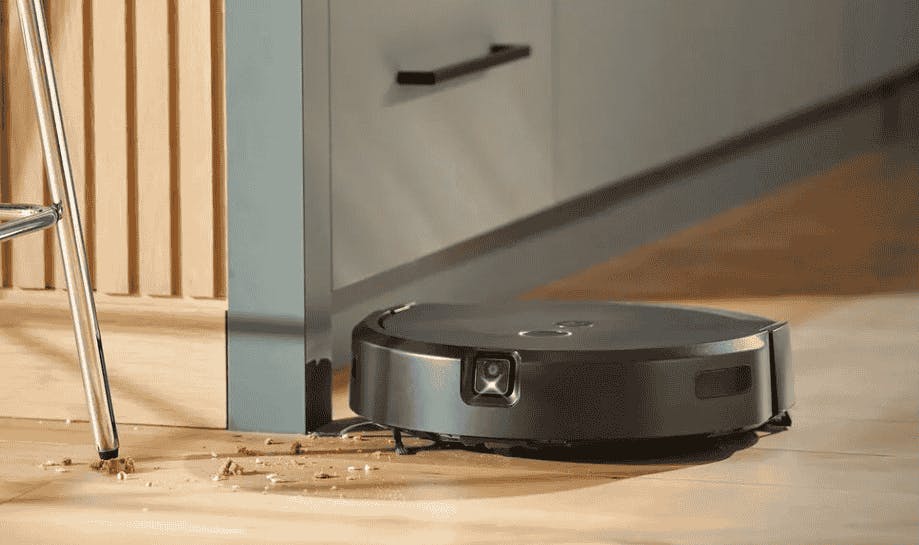
Roomba Robot (Source)
How Physical Embodiment Enhances AI
Giving AI a physical body, like a robot, can improve its ability to learn and solve problems. The main benefit is that an embodied AI can learn by trying things out in the real world, not just from preloaded data. For example, think about learning to walk. A computer simulation can try to figure out walking in theory, but a robot with legs will actually wobble, take steps, fall, and try again which enables it to learn a bit more each time. This is just like a child learning to walk by falling and getting back up, the robot improves its balance and movement through real-world experience.
Physical feedback, like falling or staying upright, teaches the AI what works and what does not work. This kind of hands-on learning is only possible when the AI has a body to act with. Real-world interaction also makes AI more adaptable. When an AI can sense its surroundings, it isn’t limited to what it was programmed to expect, rather it can handle surprises and adjust. For example, a household robot learning to cook might drop a tomato, feel the mistake through touch sensors, and learn to grip more gently next time. If the kitchen layout changes, the robot can explore and update its understanding.
Embodied AI also combines multiple senses, called multimodal learning, to better understand its environment. For example, a robot might use vision to see an object and touch to feel it, creating a richer understanding. A robotic arm assembling something doesn’t just rely on camera images, it also feels the resistance and weight of parts as it works. This combination of senses helps the AI develop an intuitive grasp of physical tasks.
Even simple devices, like robotic vacuum cleaners, show the power of embodiment. They learn the layout of a room by bumping into walls and furniture, improving their cleaning path over time. This ability to learn through real-world interaction by using sight, sound, touch, and movement gives embodied AI a practical understanding that software-only AI can not achieve. It is the difference between knowing something in theory and truly understanding it through experience.
How Embodied AI Learns: From Reinforcement Learning to VLA Models
Early embodied AI relied heavily on reinforcement learning (RL), where an agent improves by trial and error, earning rewards for useful actions and penalties for mistakes. RL is still core to how robots learn motor skills, but on its own it's slow and struggles to generalize to new tasks.
The current frontier is the foundation model for robotics, which brings the generalization of large pretrained models to physical action. Three developments matter most:
- World models learn an internal simulation of how an environment behaves, letting an agent "imagine" the outcome of an action before taking it, making learning far more sample-efficient.
- Vision-language-action (VLA) models map raw perception plus a natural-language instruction directly to physical actions. Leading examples include Google DeepMind's RT-2 and RT-X, NVIDIA's GR00T for humanoids, and Physical Intelligence's π models.
- Multimodal pretraining lets a single model draw on vision, language, depth, and proprioception together, giving embodied systems a richer understanding of their surroundings.
What ties these together is data: foundation models for embodied AI are only as capable as the demonstrations they learn from, large, diverse, accurately labeled datasets of synchronized sensor streams and action sequences.
Applications of Embodied AI
Embodied AI has several applications across various industries and domains. Here are a few key applications of Embodied AI.
Autonomous Warehouse Robots
Warehouse robots are a popular application of embodied AI. These robots transform how goods are stored, sorted, and shipped in modern logistics and supply chain operations. These robots are designed to automate repetitive, time-consuming, and physically demanding tasks to improve efficiency, accuracy, and safety in warehouses.
For example, Amazon uses robots (e.g. Digit) in its fulfillment centers to streamline the order-picking and packaging process. These robots are the example of embodied AI because they learn and operate through direct interaction with their physical environment.
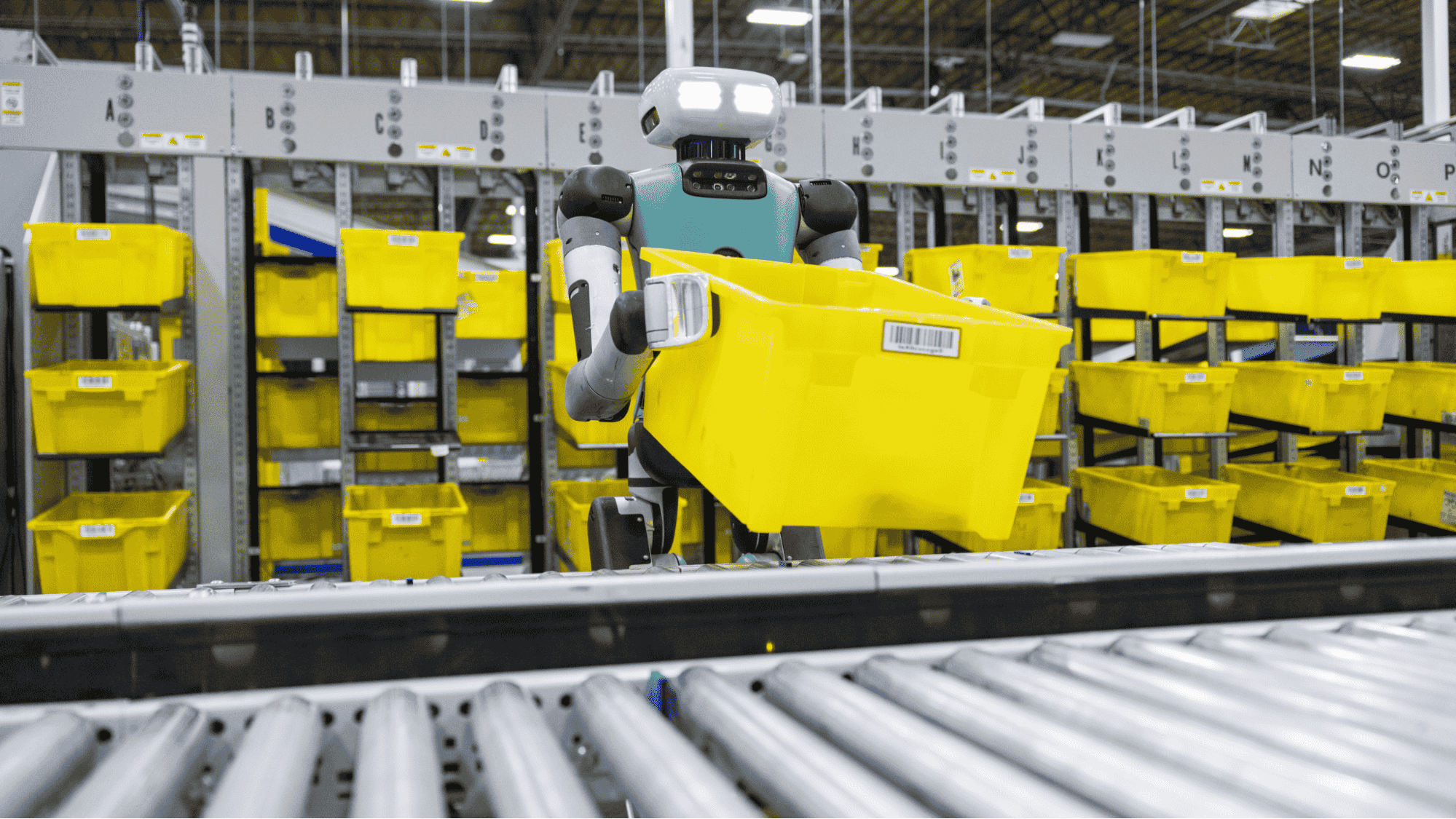
Embodied AI Robot Digit (Source)
Digit relies on sensors, cameras, and actuators to perceive and interact with its surroundings. For example, Digit uses its legs and arms to move and manipulate objects. This physical interaction generates real-time feedback that allow the robots to learn from their actions such as adjusting its grip on an item or navigating around obstacles. The robots improve their performance through repeated practice. For example, Digit learns to walk and balance by experiencing different surfaces and adjusting its movements accordingly.
Inspection Robots
Spot robot from Boston Dynamics is designed for a variety of inspection and service tasks. Spot is a mobile robot and is adaptable to different environments such as office, home, and outdoors such as construction sites, remote industrial facilities etc. With its four legs, Spot can navigate uneven terrain, stairs, and confined spaces that wheeled robots may struggle with. This makes it ideal for inspection tasks in challenging environments. Spot is equipped with camera, depth sensors, and microphone to gather environmental data. This allows it to perform tasks like detect structural damages, monitor environmental conditions, and even record high-definition video for remote diagnostics. While Spot can be operated remotely, it also has autonomous capabilities. It can patrol pre-defined routes, identify anomalies, and alert human operators in real time. Spot can learn from experience and adjust its behavior based on the environment.
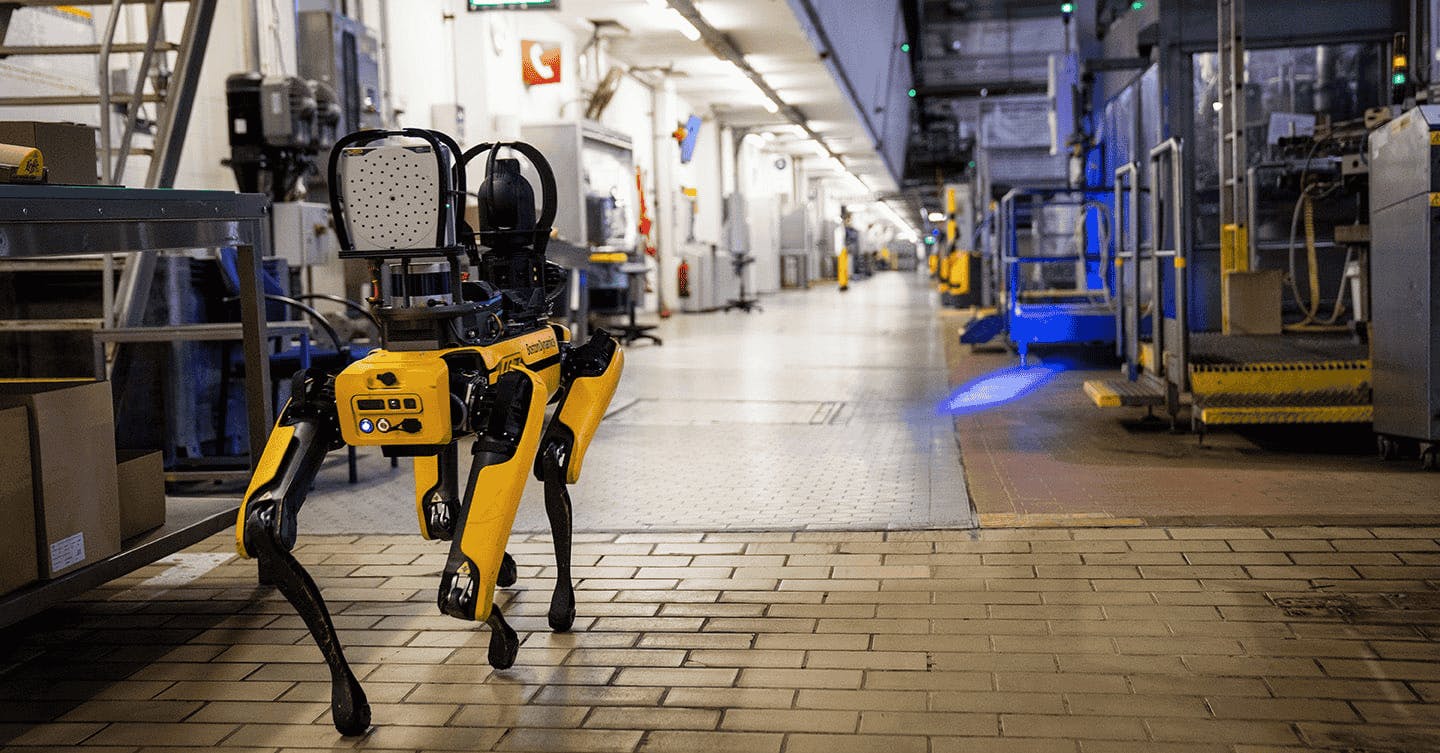
Spot Robot (Source)
Autonomous Vehicles (Self-Driving Cars)
Self-driving cars, developed by companies like Waymo, Tesla, and Cruise, use embodied AI for decision-making and actuation systems to navigate complex road networks without human intervention. These vehicles use a combination of cameras, radar, and LiDAR to create detailed, real-time maps of their surroundings. AI algorithms process sensor data to detect pedestrians, other vehicles, and obstacles and allow the car to make quick decisions such as braking, accelerating, or changing lanes. Self-driving cars often communicate with cloud-based systems and other vehicles to update maps and learn from shared driving experiences which improve safety and efficiency over time.

Vehicles uses Embodied AI from Wayve AI (Source)
Service Robots in Hospitality and Retail
Embodied AI is transforming the hospitality and retail industries by revolutionizing customer interaction. Robots like Pepper are automating service tasks and enhancing guest experiences. Robots like this serve as both information kiosks and interactive assistants.
For example, the Pepper robot uses computer vision and NLP to understand and interact with customers. It can detect faces, interpret gestures, and process spoken language which allow it to provide personalized greetings and answer common questions.
Paper is equipped with sensors such as depth cameras and LIDAR to navigate through complex indoor environments. In retail settings, it can lead customers to products or offer store information. In hotels, similar robots might be tasked with delivering room service or even handling luggage by autonomously moving through corridors and elevators.
These service robots learn from interactions. For example, it may adjust its speech and gestures based on customer demographics or feedback.
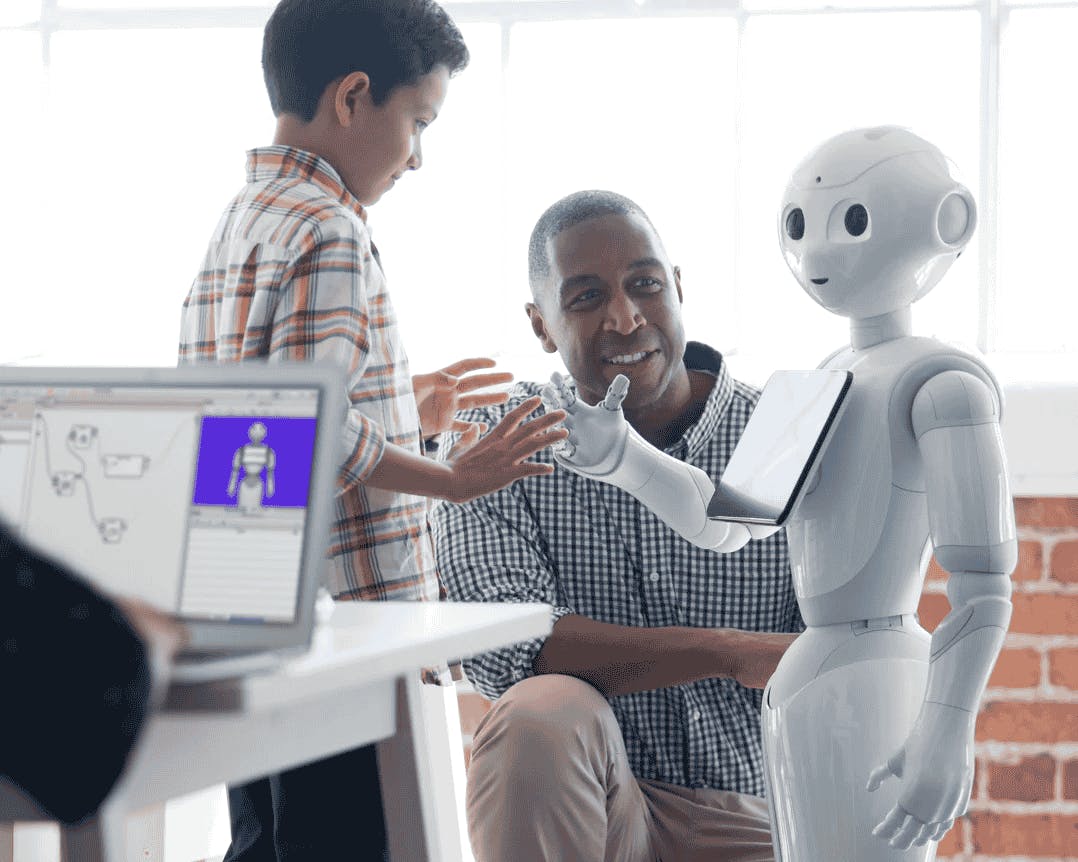
Pepper robot from SoftBank (Source)
Humanoid Robots
Figure 03, unveiled by Figure AI in late 2025, is one of the most advanced humanoid robots built for real-world work. It pairs onboard cameras and sensors with Helix, Figure's in-house VLA model, so it can perceive its surroundings, interpret instructions, and decide how to act, learning from experience rather than fixed programming. Its predecessor, Figure 02, proved the approach in production: it spent around ten months on a live BMW assembly line, handling sheet-metal parts and contributing to the build of more than 30,000 vehicles.

Figure 3 Robot (Source)
Difference Between Embodied AI and Robotics
Robotics is the field of engineering and science focused on designing, building, and operating robots which are physical machines that can perform tasks automatically or with minimal human help. These robots are used in areas like manufacturing, exploration, entertainment etc. The field includes the hardware, control systems, and programming needed to create and run these machines.
Embodied AI, on the other hand, refers to AI systems built into physical robots, allowing them to sense, learn from, and interact with their environment through their physical form. Inspired by how humans and animals learn through sensory and physical experiences, Embodied AI focuses on the robot's ability to adapt and improve its behavior using techniques like machine learning and reinforcement learning.
| Aspect | Robotics | Embodied AI |
| Definition | Field of designing and using robots, physical machines for tasks | Type of AI integrated into robots to learn from physical interactions |
| Focus | Hardware, control systems, and programming | AI systems learning and adapting through physical experiences |
| Learning Capability | May or may not learn and use traditional programming | Must learn and adapt based on physical interactions |
| Scope | Broad, includes all robot-related activities | Subset of robotics, specific to AI learning through embodiment |
| Examples | Programmed factory robot arm, remote-controlled robot | Boston Dynamics from ATLAS learning to walk, Roomba optimizing cleaning paths |
For example, a robotic arm in a car manufacturing plant is programmed to weld specific parts in a fixed sequence. It uses sensors for precision but does not learn or adapt its welding technique over time. This is an example of robotics, relying on traditional control systems without the learning aspect of Embodied AI. On the other hand, ATLAS from Boston Dynamics learns to walk, run, and perform tasks by interacting with its environment and improving its skills through experience. This demonstrates Embodied AI, as the robot's AI system adapts based on physical feedback.
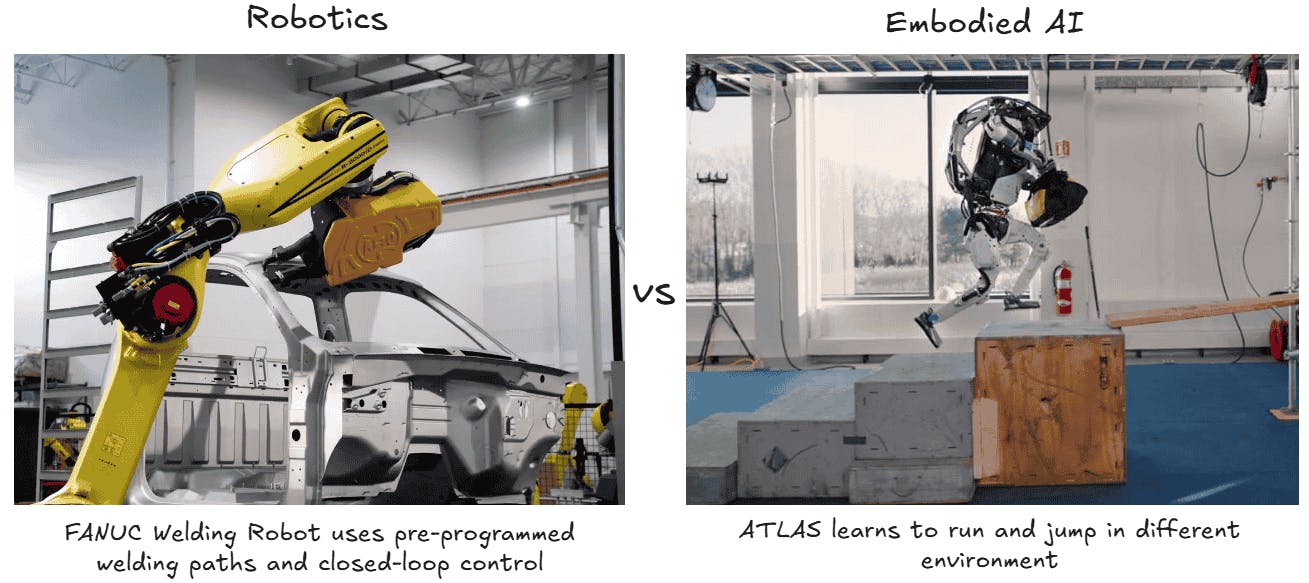
Robotics vs Embodied AI (Source: FANUC, Boston Dynamics)
What Are Embodied Agents?
An embodied agent is an AI agent that perceives and acts within an environment through a physical or simulated body, rather than only processing text or data. Where a standard AI agent reasons and produces outputs in software, an embodied agent closes the loop, it senses its surroundings, decides on an action, carries it out in the world, and learns from the result.
Embodied agents are central to current robotics research because they're how AI learns skills that can't be captured in static datasets, navigation, manipulation, and physical interaction. They're trained and tested in two main settings:
- Simulated environments: platforms like Habitat, AI2-THOR, and Isaac Sim let agents practice millions of interactions safely and cheaply before deployment.
- Physical robots: where the agent transfers learned behavior onto real hardware (the sim-to-real challenge).
The difference between an "embodied agent" and "embodied AI" is mostly framing: embodied AI is the broad field, while an embodied agent is the specific decision-making entity, the model that takes in perception and outputs action. Modern embodied agents increasingly run on foundation models, including the VLA models described above.
Future of Embodied AI
The future of Embodied AI depends on advancement of exciting trends and technologies that will make robots smarter and more adaptable. The Embodied AI is set to change both our industries and everyday lives. As Embodied AI relies on machine learning, sensors, and robotics hardware, the stage is set for future growth. Following are key emerging trends and technological advancement that make this happen.
Emerging Trends
- Advanced Machine Learning: Robots will use generative AI and reinforcement learning to master complex tasks quickly and adapt to different situations. For example, a robot could learn to assemble furniture by watching videos and practicing, handling various designs with ease.
- Soft Robotics: Robots made from flexible materials will improve safety and adaptability, especially in healthcare. Think of a soft robotic arm helping elderly patients, adjusting its grip based on touch.
- Multi-Agent Systems: Robots will work together in teams, sharing skills and knowledge. For instance, drones could collaborate to survey a forest fire, learning the best routes and coordinating in real-time.
- Human-Robot Interaction (HRI): Robots will become more intuitive, using natural language and physical cues to interact with people. Service robots, like SoftBank’s Pepper, could evolve to predict and meet customer needs in places like stores
Technological Advances
- Improved Sensors: Improvement in LIDAR, tactile sensors, and computer vision will help robots understand their surroundings more accurately. For example, a robot could notice a spill on the floor and clean it up on its own.
- Energy-Efficient Hardware: New processors and batteries will make robots last longer and move more freely, which is important for tasks like disaster relief or space missions.
- Simulation and Digital Twins: Robots will practice tasks in virtual environments before doing them in the real world.
- Neuromorphic Computing: Human Brain inspired chips could help robots process sensory data more like humans, making robots like Boston Dynamics’ Atlas even more agile and responsive.
See Industry leaders from NVIDIA, 1X, Physical Intelligence, Agility Robotics, and Dyna Robotics on the real-world challenges of building embodied AI & closing the robotics gap
Data Requirements for Embodied AI
The ability of Embodied AI to learn from and adapt to environments depends on the data on which it is trained. Therefore the data play an important role in building Embodied AI. Following are the data requirements for Embodied AI.
Large-Scale, Diverse Datasets
Embodied AI systems need a large amount of data about different environments and sources to learn effectively. This diversity helps the AI understand a wide range of real-world scenarios, from different lighting and weather conditions to various obstacles and environments.
Real-Time Data Processing and Sensor Integration
Embodied AI systems use sensors like cameras, LIDAR, and microphones to see, hear, and feel their surroundings. Processing this data quickly is crucial. Therefore the real-time data processing solution (e.g., GPUs, neuromorphic chips) is required to allow the AI to make immediate decisions, such as avoiding obstacles or adjusting its actions as the environment changes.
Data Labeling
Data labeling is a process to give meaning to raw data (e.g., “this is a door,” “this is an obstacle”). It is used to guide supervised learning models to recognize patterns correctly. Poor labeling leads to errors, like a robot misidentifying a pet as trash. Data labeling is a tedious job, data labeling tools with AI assisted labeling is needed for such tasks.
Quality Control
High-quality data is key to reliable performance. Data quality control means checking that the information used for training is accurate and free from errors. This ensures that the AI learns correctly and can perform well in real-world situations.
The success of embodied AI depends on large and diverse datasets, the ability to process sensor data quickly, clear labeling to teach the model, and rigorous quality control to keep the data reliable.
Challenges with Embodied AI
For all its promise, embodied AI faces hurdles that software-only AI doesn't. Because these systems learn and act in the physical world, both the stakes and the failure modes are higher.
- The sim-to-real gap. Most embodied AI is trained in simulation because it's fast and safe, but models that perform well in simulation often fail on real hardware, small mismatches in lighting, textures, sensor noise, and physics compound into behavior that doesn't transfer.
- Data scarcity and cost. Unlike text or images scraped from the web, embodied AI needs real-world interaction data, synchronized sensor streams and action sequences that are slow, expensive to collect, and rare for edge cases.
- Safety and reliability. A chatbot's mistake is an inconvenience; a robot's mistake near people or equipment can cause physical harm. Embodied systems demand far higher reliability and rigorous testing before deployment.
- Generalization. Robots that master one task or environment often struggle to adapt to new ones. Building systems that generalize across tasks, objects, and settings is still an open research problem.
- Compute and latency. Embodied AI has to process multimodal sensor data and decide in real time, often on-device, a constraint cloud-based software AI doesn't face.
Many of these challenges trace back to data: the diversity, quality, and labeling of the datasets an embodied system learns from largely determine how well it handles the unpredictability of the real world.
How Encord Contributes to Building Embodied AI
The Encord platform is uniquely suited to support embodied AI development by enabling efficient labeling and management of multimodal dataset that include audio, image, video, text, and document data. This multimodal data is essential for training intelligent systems as Embodied AI relies on such large multimodal datasets.
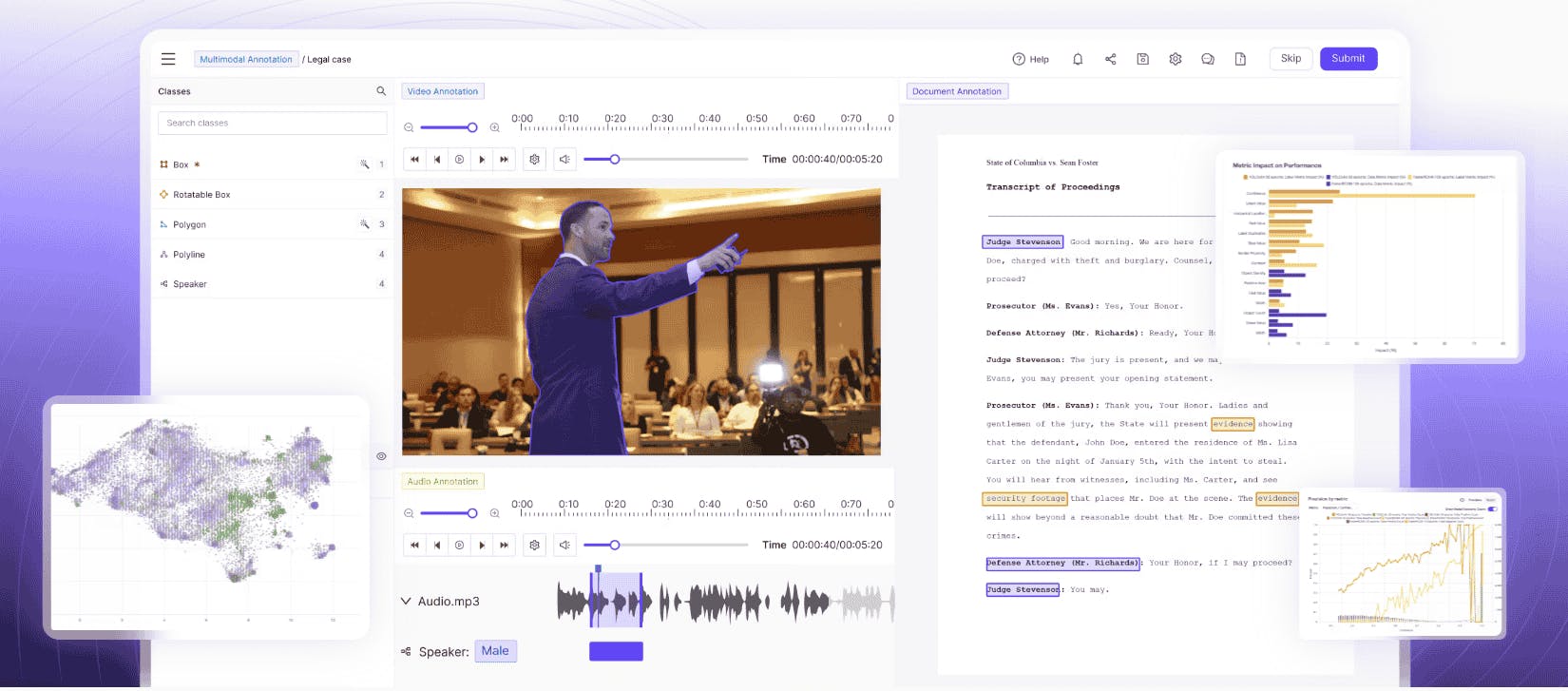
Encord, a truly multimodal data management platform
For example, consider a domestic service robot designed to help manage household tasks. This robot relies on cameras to capture images and video for object and face recognition, microphones to interpret voice commands, and even text and document analysis to read user manuals or labels on products. Encord streamlines the annotation process for all these data types, ensuring that the robot learns accurately from diverse sources. Key features include:
- Multimodal Data Labeling: Supports annotation of audio, image, video, text, and document data.
- Efficient Annotation Tools: Encord provides powerful tools to quickly and accurately label large datasets.
- Robust Quality Control: By offering robust quality control features, Encord ensures that the data used to train embodied AI is reliable and error free.
- Scalability: Embodied AI systems require large data from various environments and conditions. Encord helps manage and organize these large, diverse datasets to make it easier to train AI that can operate in the real world.
- Collaborative Workflow: Encord simplifies the collaboration between data scientists and engineers to refine models.
These capabilities supported in Encord enable developers to build embodied AI systems that can effectively interpret and interact with the world through multiple sensory inputs. Thus, Encord helps in building smarter, more adaptive Embodied AI applications.
Key Takeaways
Embodied AI integrates AI into physical machines to enable them to interact, learn, and adapt from real-world experiences. This approach moves beyond traditional, software only AI by providing robots with sensory, motor and learning capabilities.
- Embodied AI systems can learn from real-world feedback such as falling, balancing, and tactile feedback that is much like humans learn through experience.
- Embodied AI systems use a combination of vision, sound, and touch to achieve a deeper understanding of their surroundings, which is crucial for adapting to new challenges.
- Embodied AI is transforming various industries, including logistics, security, autonomous vehicles, and service sectors.
- The effectiveness of embodied AI depends on large-scale, diverse, and well annotated datasets that capture real-world complexity.
- Encord platform helps in labelling efficient, multimodal data and quality control. It supports the development of smarter and more adaptable embodied AI systems.
Explore More Resources
- AI and Robotics: How AI Is Transforming Robotic Automation Broader look at how AI powers modern robotics.
- Data Annotation for Robotics: From Simulation to Real-World Deployment Annotating multi-modal sensor data and closing the sim-to-real gap.
- What Is Robotics Data? The data types behind robotic perception, defined.
- Automating VLA Model Captioning with GPT-4o Inside the data pipeline for vision-language-action models.
- Encord for Physical AI The platform for curating and labeling robotics and physical AI data.
Frequently asked questions
Embodied AI refers to artificial intelligence integrated into physical robots, allowing them to sense, act, and learn from their environment through real-world interactions.
Unlike traditional AI, which operates in purely digital spaces, Embodied AI interacts with the physical world, enabling learning through direct experiences, such as movement, touch, and environmental feedback.
Examples include robotic vacuum cleaners like Roomba, warehouse robots like Amazon’s Digit, Boston Dynamics' Spot for inspections, self-driving cars, and humanoid robots like Figure 3.
Encord allows for the creation of generative models that enhance gesture capabilities in robots. This includes developing algorithmic mixing for more natural movements and enabling the generation of gestures based on audio input, improving the fluidity and realism of robot interactions.
For embodied AI and robotics projects, Encord supports annotation across every sensor modality a physical system depends on — image and video for object and face recognition, audio for voice-command interpretation, and text or document data for manuals and labels. That multimodal labeling, backed by built-in quality control, is what lets teams build the large, diverse, accurately-labeled datasets that VLA models and other embodied AI systems need to learn from real-world interaction.
Yes, Encord can share recorded videos demonstrating its features and capabilities. This allows users to independently explore the platform and understand its functionalities without needing to schedule additional meetings.