Data Curation: What It Is and How It Works

Head of Forward Deployed Engineering at Encord
TL;DR: Data curation is the ongoing process of sourcing, assessing, cleaning, structuring, and maintaining data so it's usable and trustworthy for AI model training, not a one-time cleanup step. It's distinct from data collection (gathering raw data), data labeling (adding ground-truth annotations), and data management (the broader governance layer that curation sits inside). What curation actually involves differs meaningfully by data type and domain: curating image data for a computer vision model looks nothing like curating text for an LLM or sensor streams for a robot.
Data curation is the process of sourcing, assessing, cleaning, structuring, and maintaining data so that it's usable, accurate, and trustworthy for the people and systems that depend on it. For AI teams specifically, that means turning raw, messy, real-world data into datasets a model can actually learn from, and doing it continuously, not once. A dataset that was well-curated at launch drifts out of alignment with production reality within months if nobody keeps curating it.
The term shows up everywhere from enterprise data governance to academic research to AI model training, and the core idea holds across all of them: data only creates value if someone has made it findable, clean, and fit for purpose. But what curation actually involves changes a lot depending on what you're curating for.
This guide covers what data curation is and its lifecycle, then breaks down how curation differs across computer vision, NLP, audio, robotics, and multimodal AI specifically.
What is data curation?
Data curation is the practice of managing data throughout its lifecycle, from sourcing through cleaning, structuring, quality assurance, and ongoing maintenance, so that it remains accurate, relevant, and usable for its intended purpose. It's an active, ongoing discipline, not a single cleanup pass. A dataset that was curated correctly at the start of a project still needs curation after deployment, as new data comes in and the world it describes keeps changing.
The term gets used in two overlapping contexts. In general data management and business intelligence, curation means building catalogues, glossaries, and governance processes so an organisation's data is findable and trustworthy.
In AI and machine learning specifically, curation means shaping the datasets a model trains, validates, and tests on, so that a model actually generalizes to the real-world conditions it will face in production rather than just performing well on a narrow, biased sample.
This guide focuses primarily on the latter, since that's where curation decisions have the most direct effect on whether a model works.
Data curation vs. data collection
Data collection is the step before curation: gathering raw data from sensors, scraped sources, user activity, public datasets, or proprietary systems. Curation starts once that raw data exists. It decides what's usable, what needs cleaning, what's missing, and what should be discarded. Collection asks "do we have the data." Curation asks "is this data actually good enough to train on, and how do we make it better."
Data curation vs. data labeling
Data labeling adds ground-truth annotations to data, a bounding box, a transcript, a sentiment tag, so a supervised model has something to learn from. Curation is what happens before and around labeling: selecting which examples are worth labeling in the first place, removing duplicates and low-quality labels, and making sure the labeled set is balanced and representative. Labeling without curation means paying annotators to carefully label data that shouldn't have been in the training set to begin with.
Data curation vs. data management
Data management is the broader governance layer: the policies, standards, and infrastructure that keep an organization's data secure, compliant, and consistently structured across its entire lifecycle. Curation is one function inside that larger discipline, specifically focused on making individual datasets usable and high-quality, rather than setting organization-wide policy.
Why does data curation matter for AI and machine learning?
Model performance is bounded by data quality, not the other way around. A well-designed architecture trained on a poorly curated dataset will still learn the wrong patterns, miss edge cases, and fail in production in ways that are expensive to diagnose after the fact, because the failure looks like a modeling problem when it's actually a data problem.
The shift from model-centric to data-centric AI
For most of the last decade, teams optimized primarily for model architecture: bigger networks, better hyperparameters, novel training techniques. As architectures have converged and matured, especially with the rise of foundation models that most teams fine-tune rather than train from scratch, the differentiator has shifted to data. This is what's generally referred to as data-centric AI: the recognition that for a given architecture, improving the training data yields more reliable gains than continuing to tune the model. Curation is the practical mechanism through which teams act on that shift.
What happens when curation is skipped
Skipping curation doesn't just mean slightly noisier data. It means duplicate examples that silently overweight certain patterns, missing edge cases that a model never learns to handle, label imbalance that biases predictions toward the majority class, and stale data that no longer reflects production conditions. Every one of these shows up as a model failure that gets debugged as if it were an architecture or training problem, when the actual fix was upstream, in the data.
What does the data curation lifecycle look like?
Curation is usually described as a set of stages, though in practice, teams cycle through them repeatedly rather than moving through once in order.
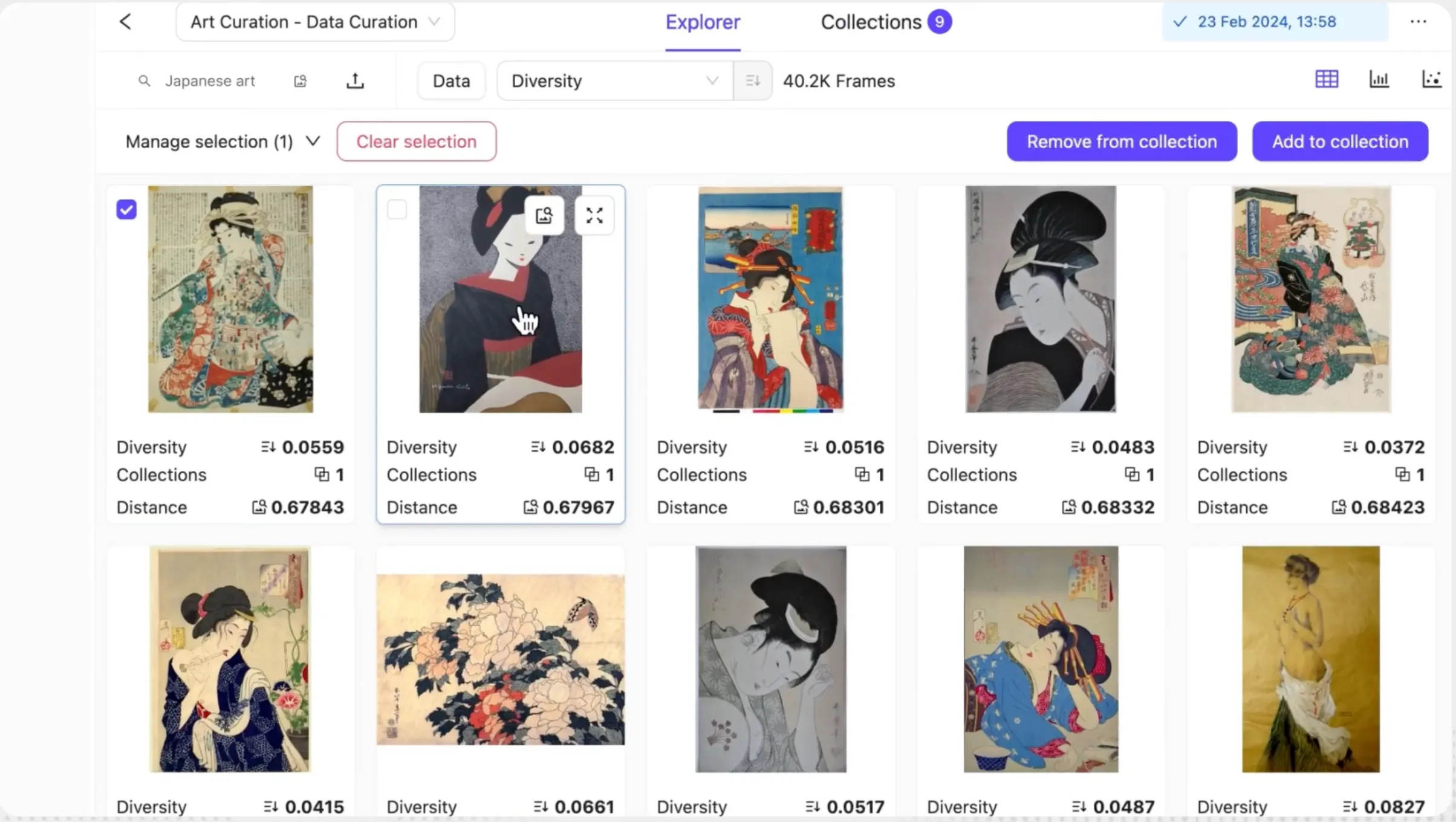
1. Sourcing and ingestion
Bringing raw data in from its origin, whether that's sensor feeds, scraped web content, user-generated content, or proprietary internal systems, and getting it into a place where it can be assessed and worked on.
2. Quality assessment and cleaning
Identifying and fixing errors, duplicates, corrupted files, and inconsistent formats. This is usually the most time-consuming stage, and the one most teams underinvest in relative to how much it affects downstream model performance.
3. Structuring, annotation, and labeling
Organizing data into a consistent, model-ready structure, and adding the ground-truth labels a supervised model needs, from bounding boxes to transcripts to preference rankings.
4. De-identification and compliance
Removing or masking personally identifiable information and confirming the data meets relevant regulatory requirements before it moves further into the pipeline, particularly important in healthcare, finance, and any domain handling sensitive personal data.
5. Sampling and balancing
Selecting a representative, balanced subset of available data rather than using everything indiscriminately, since an imbalanced dataset (too many of one class, too few edge cases) produces a model that's imbalanced in exactly the same way.
6. Evaluation and continuous monitoring
Checking curated data against quality metrics before it goes into training, and then continuing to monitor incoming production data after deployment, since a model's real-world input distribution drifts from its training distribution over time whether anyone's watching or not.
How does data curation differ across data types and domains?
The lifecycle above holds at a general level, but what curation actually looks like day to day depends heavily on the type of data and the model it's feeding.
Data curation for computer vision
Computer vision curation centers on image and video quality: removing near-duplicate frames, catching corrupted files, balancing representation across lighting conditions and rare objects, and making sure edge cases like extreme weather or unusual angles are represented rather than filtered out. It's also where active learning and image embeddings do the most work, letting teams label the highest-value examples instead of an entire dataset.
Data curation for NLP and LLM training data
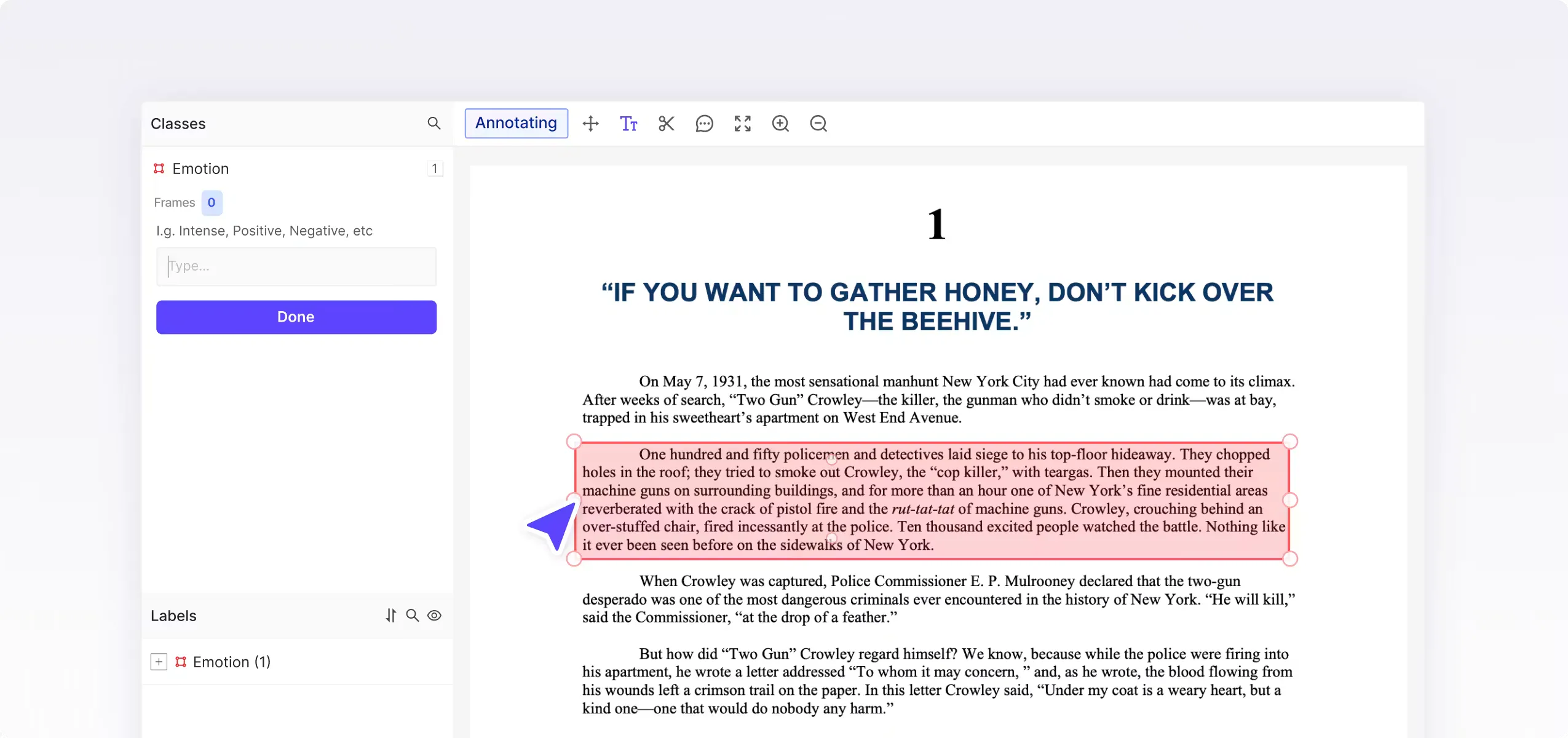
Text curation for NLP and LLM training looks different because the failure modes are different: deduplication matters enormously at web scale, since repeated text disproportionately shapes what a language model memorizes; quality filtering determine what values and style a model absorbs;
Curation decisions at the pre-training stage, what gets kept from a large web crawl and what gets filtered out, have an outsized effect on downstream model behavior compared to almost any other stage of LLM development. A 2025 study on multilingual LLM pretraining data selection found that model-based curation approaches, filtering and selecting pretraining data using a trained model rather than fixed heuristics alone, meaningfully improved downstream performance over heuristic-only filtering, reinforcing that curation quality at this stage isn't a rounding error (Arxiv,2026).
Data curation for audio and speech data
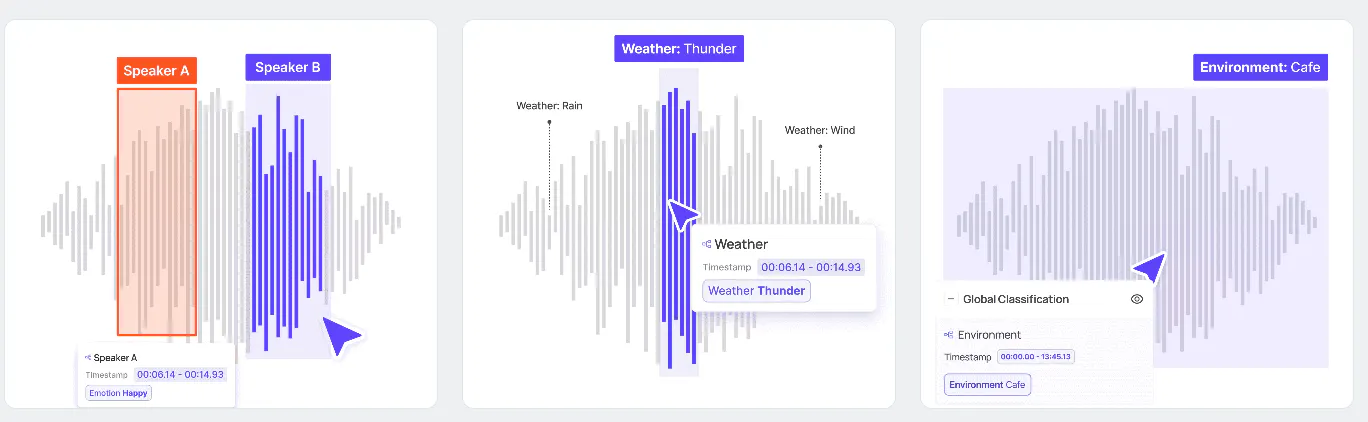
Audio curation involves filtering by signal quality, removing silence and background noise where it isn't useful signal, balancing speaker and accent representation, and organizing large volumes of unstructured audio so the right clips are findable before transcription and labeling even start.
Natural-language and metadata-based search over raw audio libraries, rather than manual folder browsing, is what makes this tractable at scale.
Data curation for robotics and Physical AI
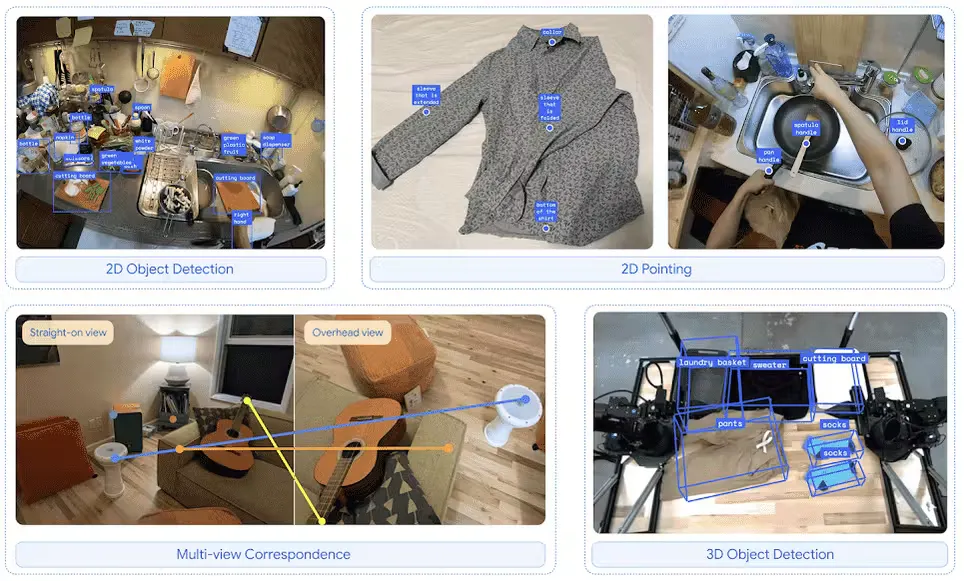
Robotics curation adds two dimensions on top of everything above: multimodal sensor alignment (camera, LiDAR, depth, and audio streams have to be curated together, not separately) and temporal structure (action sequences need curating for coverage of edge cases like near-misses and recovery behaviors, not just successful task completions). Research teams training large behavior models for robot manipulation have described curating datasets spanning thousands of hours of demonstration data alongside tens of millions of vision-language samples, combining robot episodes with human video and dense annotations, a scale and structure that has no real equivalent in single-modality image curation. (Arxiv, 2026)
Data curation for multimodal datasets
Multimodal curation is where all of the above converge, and it adds a requirement none of the single-modality cases have on their own: the curated dataset has to preserve relationships between modalities, not just quality within each one. A curated image-text pair is only useful if the caption still accurately describes the image after both have been through separate cleaning passes. Automatic curation approaches for large-scale audio-visual datasets have shown that using cross-modal correspondence itself as a curation signal, essentially checking that audio and video agree with each other, produces higher-quality datasets than curating each modality independently and merging afterward, an approach detailed in research on automatic curation for audio-visual representation learning.

Data curation in general enterprise and business intelligence
Outside of AI model training specifically, data curation is also a core data management function: building data catalogs, maintaining business glossaries, and enriching metadata so that data across an organization is findable and consistently understood. This is closer to what generalist data governance teams mean by the term, and it matters most in regulated industries, where curation practices intersect with compliance requirements around data quality and provenance.
What are the biggest data curation challenges?
- Data quality and bias at scale. As dataset size grows into the hundreds of thousands or millions of examples, manual quality checks stop being feasible, and any bias in what gets sampled or kept compounds across the entire dataset.
- Scarcity of labeled, curated data in specialized domains. Healthcare, robotics, and other domains with high collection costs or safety constraints often can't rely on abundant public data the way general computer vision or NLP tasks can, which makes curation decisions (what to keep, what to prioritize for labeling) higher-stakes with less room for error.
- Data drift after deployment. Curation doesn't end at training. Production data distributions shift over time, whether through seasonal changes, new user behavior, or sensor degradation, and a dataset curated once at launch becomes progressively less representative unless monitoring and re-curation are built into the pipeline.
- Security, privacy, and regulatory compliance. De-identification and data governance requirements, particularly for healthcare and financial data, add a layer of curation work that has to happen correctly the first time, since retroactively fixing a privacy violation in a dataset already used for training is far harder than preventing it during curation.
What to look for in a data curation platform
- Does it work across your modalities, or just one? A platform built exclusively for image curation won't help once your project adds video, audio, or text, and re-platforming mid-project is expensive.
- Can you search and filter at scale, not just browse? Embeddings-based and natural-language search matter once a dataset crosses into the hundreds of thousands of files; folder structures and manual tagging stop working long before that.
- Does it surface quality issues automatically? Look for built-in Quality metrics (duplicates, outliers, brightness, class balance, and similar signals) rather than relying entirely on manual review to catch them.
- Does curation connect directly to labeling and evaluation, or live in a separate tool? If curation, annotation, and model evaluation sit in three disconnected systems, every handoff between them is a place where quality issues go unnoticed.
- Does it support your compliance requirements? For regulated data, confirm de-identification tooling and relevant certifications (HIPAA, SOC 2, GDPR) rather than assuming general-purpose curation tools cover this by default.
What tools are available for data curation?
The data curation tool landscape splits into three broad categories: general data catalogs built for enterprise data management, specialized AI-native curation platforms, and point solutions that handle one narrow task like deduplication or PII scrubbing.
General catalogs are built for business intelligence teams cataloging structured data in databases and warehouses. They typically lack embeddings-based search or automated quality metrics for unstructured data, which makes them a poor fit for AI training data.
AI-native curation platforms are built specifically for ML teams. They support natural language and similarity search across millions of unstructured files, surface quality issues automatically (duplicates, outliers, class imbalance), and connect directly into labeling and evaluation workflows.
The right choice depends on what you're curating: if your data is unstructured, high-volume, and feeding model training, see Encord's guide to the best data curation tools for a breakdown of the top platforms by modality support, search capability, and pricing.
| Curation stage | Manual approach | Generic automation | Encord |

| Sourcing and ingestion | Manually locating and copying files from storage | Scripted pulls from fixed sources | Native integrations with AWS, GCP, Azure, and OTC, no data migration |
| Quality assessment and cleaning | Spot-checking a sample by eye | Rule-based filters on file size or format | 40+ automated quality metrics, including duplicates, brightness, and blur |
| Structuring and annotation | Manual tagging in spreadsheets | Basic auto-tagging by metadata | Embeddings-based and natural language search, smart Collections |
| De-identification and compliance | Manual redaction review | Keyword-based PII scrubbing | Built-in de-identification tooling, SOC 2, HIPAA, and GDPR support |
| Sampling and balancing | Eyeballing class distribution | Random sampling | Embedding plots to find under-represented classes visually |
| Evaluation and monitoring | Periodic manual audits | Scheduled batch reports | Continuous monitoring connected directly to labeling and evaluation |
How does Encord support data curation across data types?
Encord handles the curation layer across image, video, audio, text, DICOM, and 3D/LiDAR data in one platform, using embeddings-based and natural-language search to surface the right data before it goes to annotation, along with automated quality metrics like uniqueness, brightness, and contrast to catch issues at scale rather than by manual review.
Curation connects directly to Encord for Annotation, labeling and model evaluation, so quality issues caught during curation don't get lost in a handoff between separate tools.
For the full walkthrough of how this works specifically for computer vision datasets, including annotation and active learning:
See Encord's guide to data curation for computer vision
To explore the curation product directly, View Encord's data indexing and curation page
Key takeaways
- Data curation is the ongoing process of sourcing, cleaning, structuring, and maintaining data so it's trustworthy and usable, not a one-time cleanup step.
- It's distinct from collection (gathering raw data), labeling (adding annotations), and management (the broader governance layer curation sits inside).
- The general lifecycle, sourcing, cleaning, structuring, compliance, sampling, and monitoring, holds across domains, but what curation actually involves differs substantially between computer vision, NLP/LLM, audio, robotics, and multimodal data.
- Curation quality has a direct, outsized effect on model performance compared to architecture choices, which is the core premise behind the shift to data-centric AI.
- Evaluating a curation platform means checking modality coverage, search and filtering at scale, automated quality metrics, and how tightly curation connects to labeling and evaluation.
Explore more
- Data Curation for Computer Vision: The Complete Guide
- Data Labeling for Robotics: The Complete Guide
- Multimodal Data Labeling: One Pipeline for Image, Video, Audio, Text and 3D
- Manage and Curate Audio Data Using Custom Filters and Natural Language
- Encord's Data Indexing & Curation Platform
Frequently asked questions
Data curation is the process of collecting, cleaning, organizing, and maintaining data so it's accurate and usable, whether that's for training an AI model, powering business analytics, or supporting research. It's ongoing, not a one-time task.
Curation is about making data usable and high-quality overall, deciding what's worth keeping, cleaning it, and organizing it. Labeling is the specific act of adding ground-truth annotations to that data so a supervised model can learn from it. Curation typically happens before and around labeling, not instead of it.
Yes. Outside of AI model training, data curation is a core function of enterprise data management, covering data catalogs, business glossaries, and metadata enrichment so that data across an organization stays findable and trustworthy. The underlying principle, that data only creates value once someone has made it usable, holds in both contexts.
Computer vision curation focuses on image and video quality, balance, and edge-case coverage. NLP and LLM curation focuses heavily on deduplication, toxicity and quality filtering, and PII removal at web scale. Robotics curation adds multimodal sensor alignment and temporal action structure on top of standard image and video curation. Each domain shares the same underlying lifecycle but applies it to very different failure modes.
Tools range from general data catalogs and governance platforms for enterprise data management to specialized AI data platforms that handle embeddings-based search, automated quality metrics, and direct integration with labeling and model evaluation. Encord is one example built specifically for AI teams working across image, video, audio, text, and 3D data.
The best data curation tool depends on your data type and scale. For unstructured AI training data like images, video, audio, and text, look for embeddings-based search, automated quality metrics, and native integration with labeling and evaluation, rather than a general-purpose data catalog built for structured business data.
Cost depends on whether curation is manual, tool-assisted, or fully automated, and on data volume. Manual curation scales linearly with headcount and data size, which gets expensive past a few hundred thousand files. Tool-assisted curation shifts cost from labor to platform licensing, and typically pays for itself once teams cross into six-figure file counts.